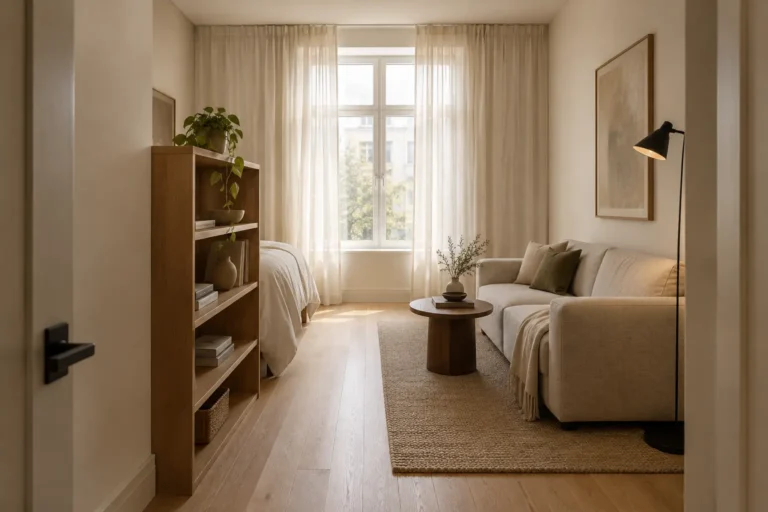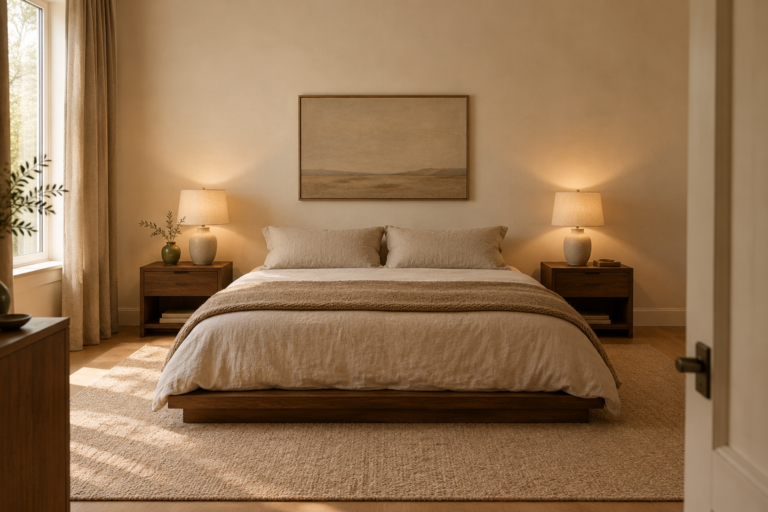
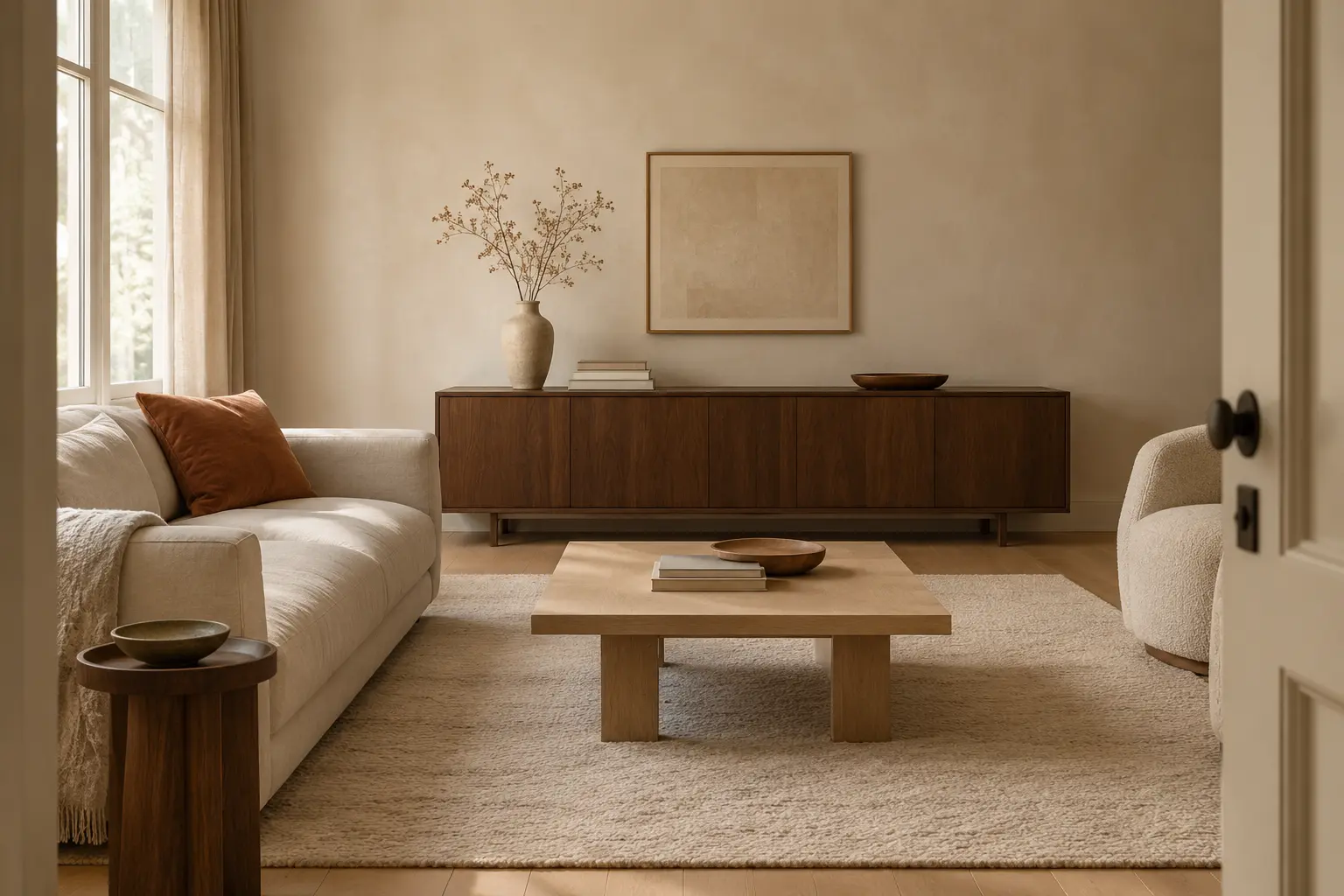
Dark Wood Warm Minimalist Design: The Walnut Reset
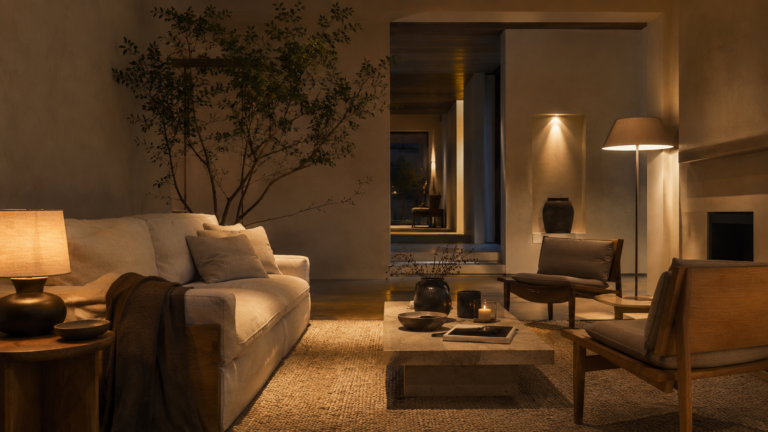
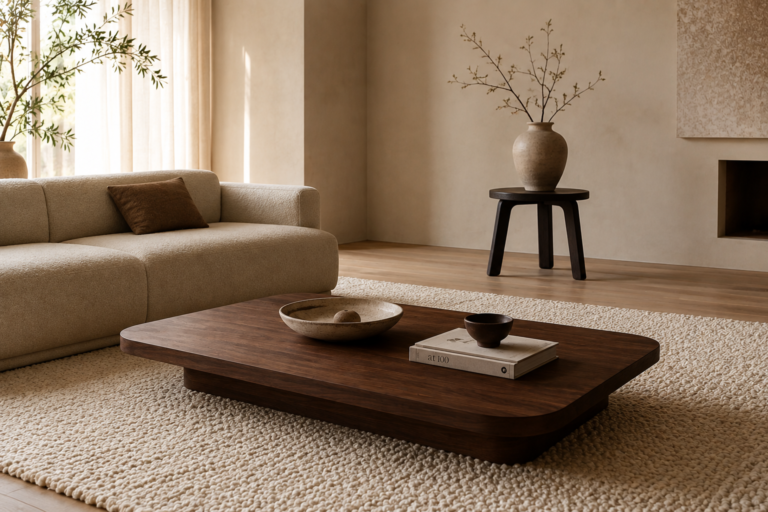
Dark wood stays warm instead of heavy when it covers a small share of what you see and shows up in three different sizes. One large anchor piece, one medium echo and one small spark is the whole formula, and everything else in the room should be soft, light and textured. That is dark wood warm minimalist design in practice, and the sections below show you how to build it with walnut, oak and a few earthy colors.
Quick answer: Dark wood warm minimalist design works when walnut or other deep timber fills roughly a fifth of what you see in any one view. Use one anchor piece, one medium echo and one small accent, match undertones, repeat a warm earth color three times, and add textured fabrics so the room feels grounded, not heavy.
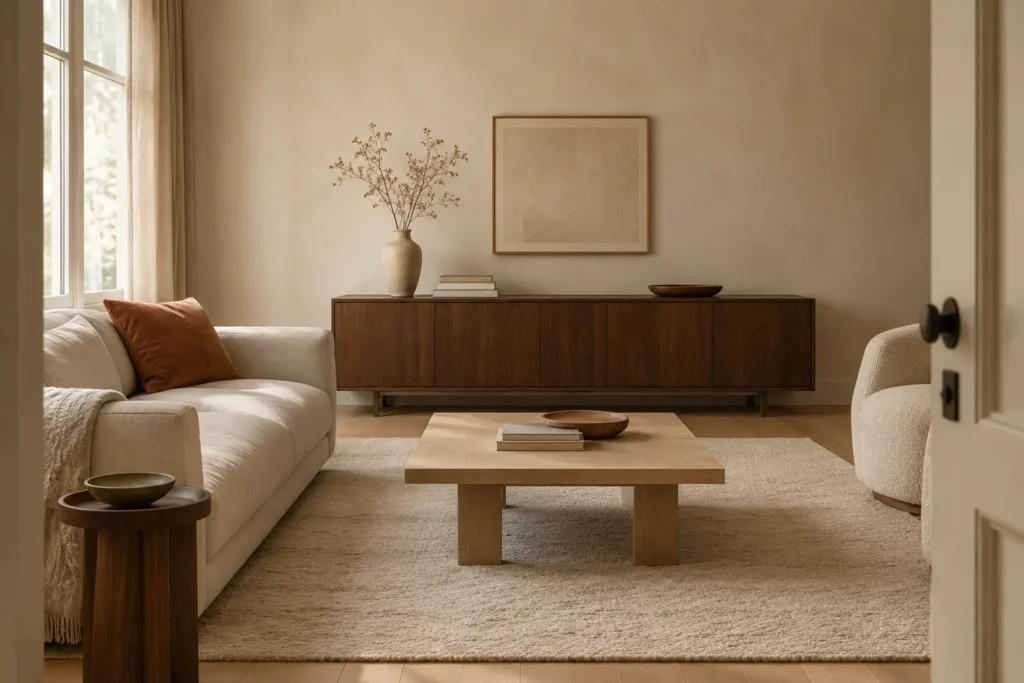
Table of Contents
Dark wood warm minimalist design runs on a visual weight budget
Dark wood feels heavy for one reason: too much dark surface sits in the same line of sight. Your eye reads depth of color as weight, so a walnut sideboard, a walnut floor and a charcoal wall all pulling at once will tip a room, even when the furniture itself is simple. Think of it as a budget you spend on purpose.
Here is a rule you can reuse, the Anchor, Echo, Spark method. Stand in the doorway and count the dark wood you can see. Aim for one anchor, which is your largest piece, one echo, which is a medium piece on the other side of the room or at a different height, and one spark, which is a small object. As a rough guide, deep timber works best when it fills about 15 to 25 percent of the furniture and surface area in that view. This is a styling guideline, not a measured standard, so adjust it to your room.
Myth versus reality: dark wood does not automatically shrink a room. A single dark piece against a pale wall often adds depth, because contrast gives the eye somewhere to rest. The shrinking effect appears when dark pieces cluster on one side with nothing light to balance them.
Check the undertone and finish before you place a single piece
Undertone decides whether your walnut sits quietly with warm neutrals or fights them. Dark woods lean red, neutral brown or olive yellow, and that lean changes how nearby cream, beige and white look.
Here is a quick test:
1. Look at the piece in daylight, away from direct sun.
2. Hold a plain white sheet of paper beside it.
3. Ask which direction the wood pulls: red or orange, neutral chocolate, or yellow green.
4. Hold your wall paint sample and main fabric next to it and check that they share the same warmth.
Red leaning wood tends to pair easily with warm whites and clay tones. Neutral brown is the most flexible. Yellow leaning wood can look muddy beside cool gray, so keep gray fabrics away from it.
Finish matters just as much. Matte and oiled surfaces absorb glare and read calm, while high gloss reflects windows and lamps and makes a piece look larger than it is. If you are choosing between two finishes for a minimalist room, pick the quieter one.
Here is the part most people skip: look at the wood again at night. Warm bulbs rated around 2700K to 3000K and layered lighting do more for walnut than one bright ceiling fixture, which tends to flatten the grain.
How to style walnut furniture with Anchor, Echo and Spark
Place the anchor first, then the echo, then the spark, because each one is positioned in relation to the one before it.
1. Choose the anchor. Pick your largest dark wood piece, such as a sideboard, dining table or bed frame, and set it against the longest uninterrupted wall. Keep the wall above it mostly open so the piece reads as a deliberate choice.
2. Add the echo. Repeat the wood in a medium piece across the room at a different height, such as a side table, a lamp base or a large frame. Keep its shape simpler than the anchor.
3. Place the spark. Add one small dark wood object, like a tray, bowl or candle holder, next to the lightest area in the room so the contrast is easy to see.
4. Style the surface. On a sideboard, group three objects of different heights: one tall, one wide and one soft, such as a plant or dried stems. Leave roughly a third of the surface bare.
5. Check from the doorway. Take a photo and turn it to black and white. The dark spots should form a loose triangle instead of stacking on one side.
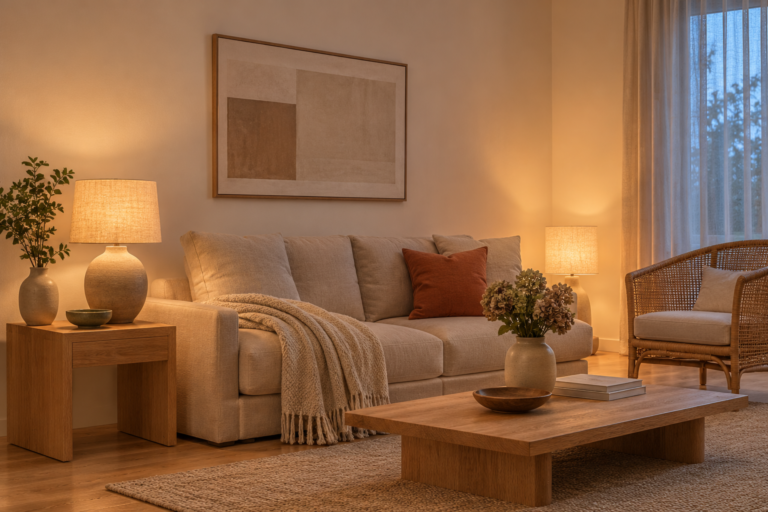
Illustrative example: picture a living room of about 4 by 5 meters with a cream sofa and warm white walls. The anchor is a walnut media console on the long wall. The echo is a small walnut side table beside the sofa, and the spark is a walnut tray on a pale oak coffee table. The dark pieces form a triangle, and nothing else in the room is darker than a mid brown.
Mixing light oak and dark wood: choose a bridge, not a match
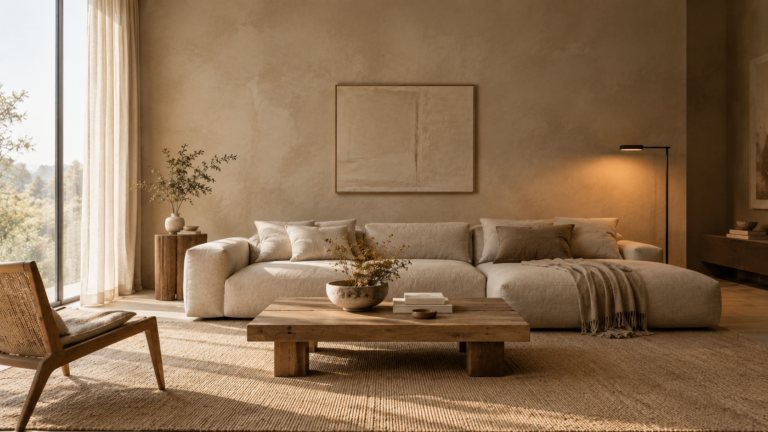
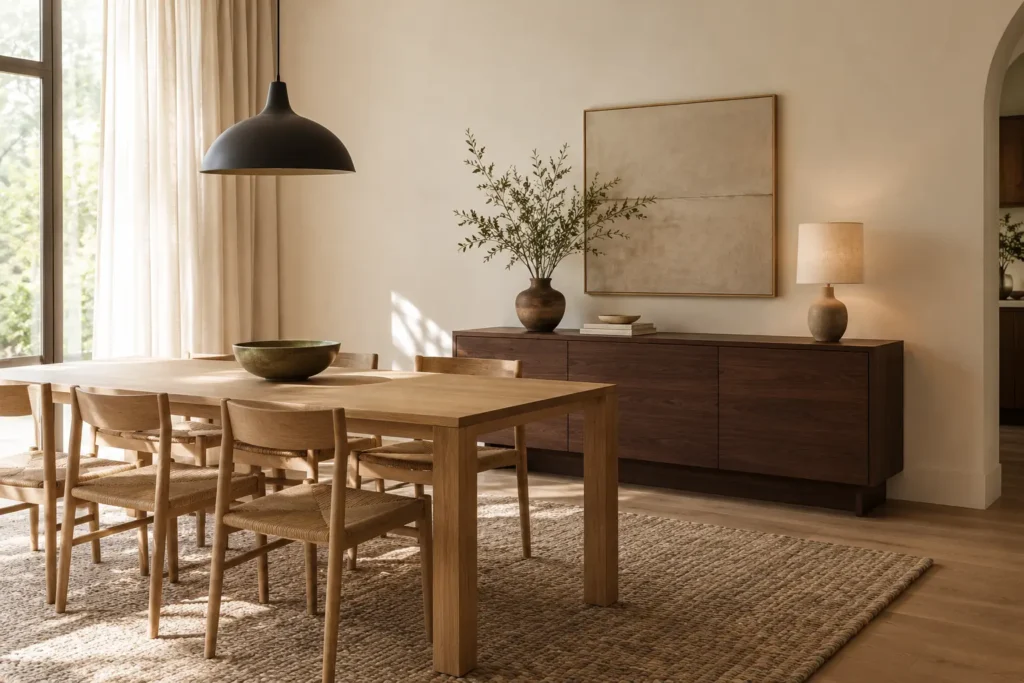
You can mix light oak and dark wood safely if you limit the room to two main wood tones and connect them with one bridge element. Matching them exactly is not the goal, and it often looks like a showroom set. The goal is for the two tones to feel related.
Pick your approach:
Option 1: Bridge piece. Add a rug, artwork or mid brown wood item that contains both tones. Best for: open plan rooms where light and dark pieces sit near each other. Watch out for: a bridge that is too small, which reads as an accident.
Option 2: Zoning. Use light oak in one zone, such as dining, and walnut in another, such as living. Best for: large open rooms with clear zones. Watch out for: zones that overlap, which brings back the clash.
Option 3: Dark anchor, light everything else. Use walnut only as the anchor and echo, with oak or pale finishes elsewhere. Best for: small rooms and first attempts. Watch out for: too little dark wood, which can look like a mistake instead of a choice.
Three supporting rules:
1. Cap the room at two main wood tones plus one small wildcard.
2. Match grain scale. A bold, wavy grain beside a fine, straight grain looks busy.
3. Repeat one metal finish, such as matte black or aged brass, across both woods.
Choose Option 1 if your woods already share a room and you cannot move them. Choose Option 3 if you are buying new and want the lowest risk.
Warm accent colors for neutral rooms: one color, repeated three times
Pick one warm accent and repeat it three times at different scales, and the room will feel planned instead of decorated. Dark wood already supplies the depth, so the accent should be muted and earthy, not bright.
Terracotta. Best for: neutral brown walnut and cream walls. Watch out for: very orange tones against red leaning wood.
Olive green. Best for: calming a room with yellow leaning oak. Watch out for: very dark olive in a room with little daylight.
Rust. Best for: adding warmth to linen and wool. Watch out for: competing with red leaning wood.
Mushroom or taupe. Best for: anyone nervous about color. Watch out for: blending into the walls and adding nothing.
Use a simple guideline: put the accent on roughly a tenth of the visible area, spread over three items such as a vase, a cushion and a piece of art.
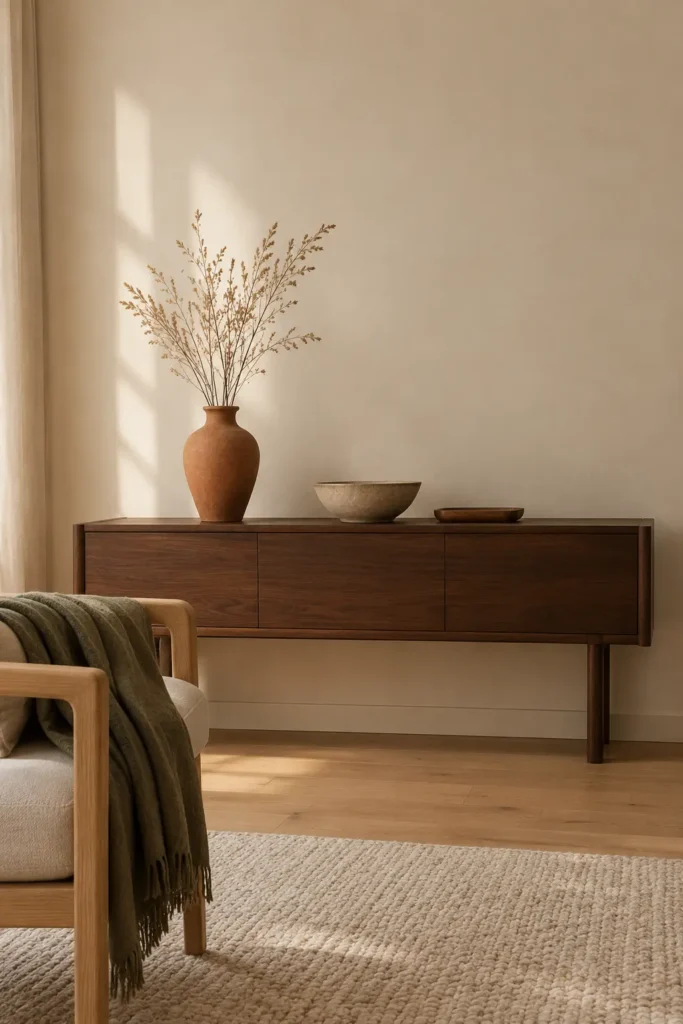
Cozy modern organic decor comes from touch more than color. Texture does the cozy work, and organic textures like wool, linen and unglazed ceramics soften the polish of walnut. A single wool rug under a dark console does more than five extra accessories.
Six mistakes that make dark wood feel heavy, and how to fix each
1. Mistake: Dark floor, dark furniture and dark walls together. Consequence: the room loses depth and feels closed in even in daylight. Fix: lighten at least one of the three, usually the walls.
2. Mistake: Pushing every dark piece to one side of the room. Consequence: the room tips visually and the empty side feels unfinished. Fix: spread dark pieces in a triangle.
3. Mistake: Cool white walls with red leaning wood. Consequence: the wood looks orange and the walls look slightly blue. Fix: switch to a warm white with a similar warmth to the wood.
4. Mistake: High gloss finishes with no soft materials. Consequence: glare and an echoing, showroom feel. Fix: add a wool rug and linen curtains.
5. Mistake: One cold, bright bulb overhead. Consequence: the grain looks flat and the wood looks gray. Fix: use warm bulbs and add lamps at table height.
6. Mistake: Crowded surfaces. Consequence: clutter looks louder against a dark background. Fix: leave about a third of every dark surface bare.
A crowded surface looks even busier against dark wood, which is one reason a minimalist living room can still feel messy.
When dark wood is the wrong move, and what to use instead
Dark wood is a poor fit for rooms with little natural light, very low ceilings, or tight spaces where every wall is within arm’s reach. In those rooms, dark finishes absorb light and the space can feel closed in.
What to do instead: choose a mid tone wood, such as warm oak or lightly stained ash, for large pieces, and keep dark wood to the spark only. In a small apartment, keep dark wood to one anchor piece and let walls and textiles carry the light. In a warm minimalist bedroom, the bed frame becomes the anchor and the same weight budget applies.
Practical details beginners miss: dark wood tends to show dust and water rings more than light wood, and strong sun can shift some finishes over time. Check the maker’s care guidance, use coasters and trays, and position pieces away from direct sun where you can.
Save this checklist:
1. Count dark wood from the doorway: one anchor, one echo, one spark.
2. Test undertone in daylight with white paper.
3. Choose matte or oiled finishes over high gloss.
4. Limit the room to two main wood tones plus one wildcard.
5. Add one bridge element if you mix light oak and dark wood.
6. Pick one warm accent and repeat it three times.
7. Use warm bulbs and lamps at table height.
8. Leave about a third of every dark surface bare.
Questions about styling walnut, oak and earthy accents
How much dark wood is too much in a minimalist room?
If dark wood covers more than about a quarter of the furniture and surfaces you can see from the doorway, the room usually starts to feel heavy. That is a guideline, not a rule. A bright room with large windows can carry more than a dim one.
What colors go with dark wood furniture in a neutral room?
Warm whites, oatmeal, clay and olive are reliable. When you choose wall paint, look for the light reflectance value printed on many swatches, which runs from 0 to 100. Higher values reflect more light, and many designers favor higher values for rooms with dark furniture. Always test a sample beside the wood.
Does walnut look dated?
It looks dated when it appears as a full matching set with ornate details. Slim legs, simple shapes and one or two pieces mixed with lighter materials read as current.
Is walnut or oak better for warm minimalism?
Neither wins outright. Walnut gives depth and contrast, while oak gives softness and brightness. Choose walnut as an anchor in a well lit room and oak where daylight is limited.
How do I keep dark wood looking rich?
Dust with a soft cloth, wipe spills quickly and use coasters. Follow the care instructions from the maker, since oiled and lacquered finishes need different treatment.
Your next step: one swap and one photo
Dark wood works in a warm minimalist room when you treat it as a budget: one anchor, one echo, one spark, with matched undertones, a bridge between wood tones and one warm accent repeated three times. Keep it away from low light rooms or use it sparingly there.
Your next step is simple. Stand in the doorway of your main room, take a photo and turn it to black and white. If the darkest shapes cluster on one side, move one piece across the room and look again.
Editorial note: This article is written to help readers style dark wood in warm minimalist homes. Furniture finishes, paint colors and lighting vary, so check samples in your own room before you buy or repaint.