How to Style Small Apartment Rooms Into a Warm Minimalist Sanctuary (Without Major Renovations)
A small apartment can be beautiful without becoming a renovation project.
You don’t need to knock down walls.
You don’t need custom cabinetry.
And if you’re renting, you certainly don’t need to risk your security deposit just to make the space feel like home.
Sometimes, the biggest transformation comes from much quieter decisions.
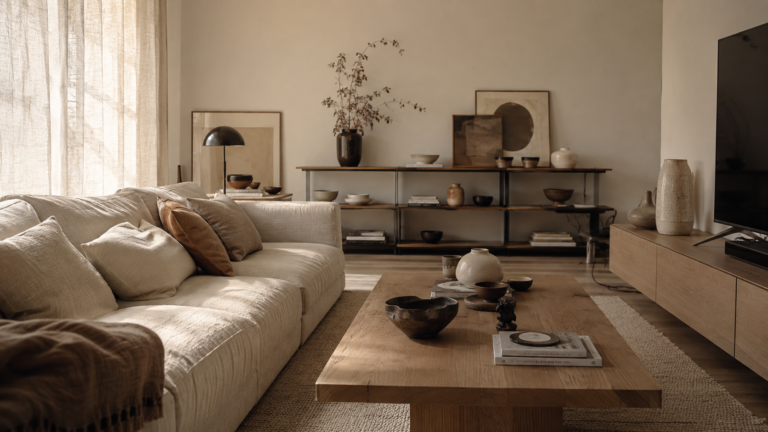
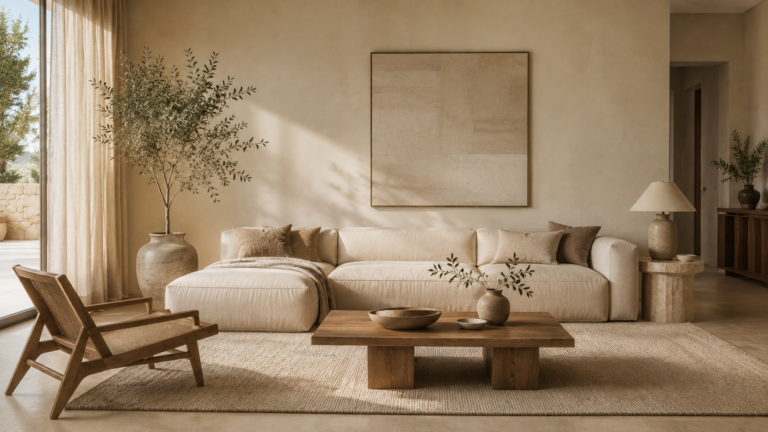
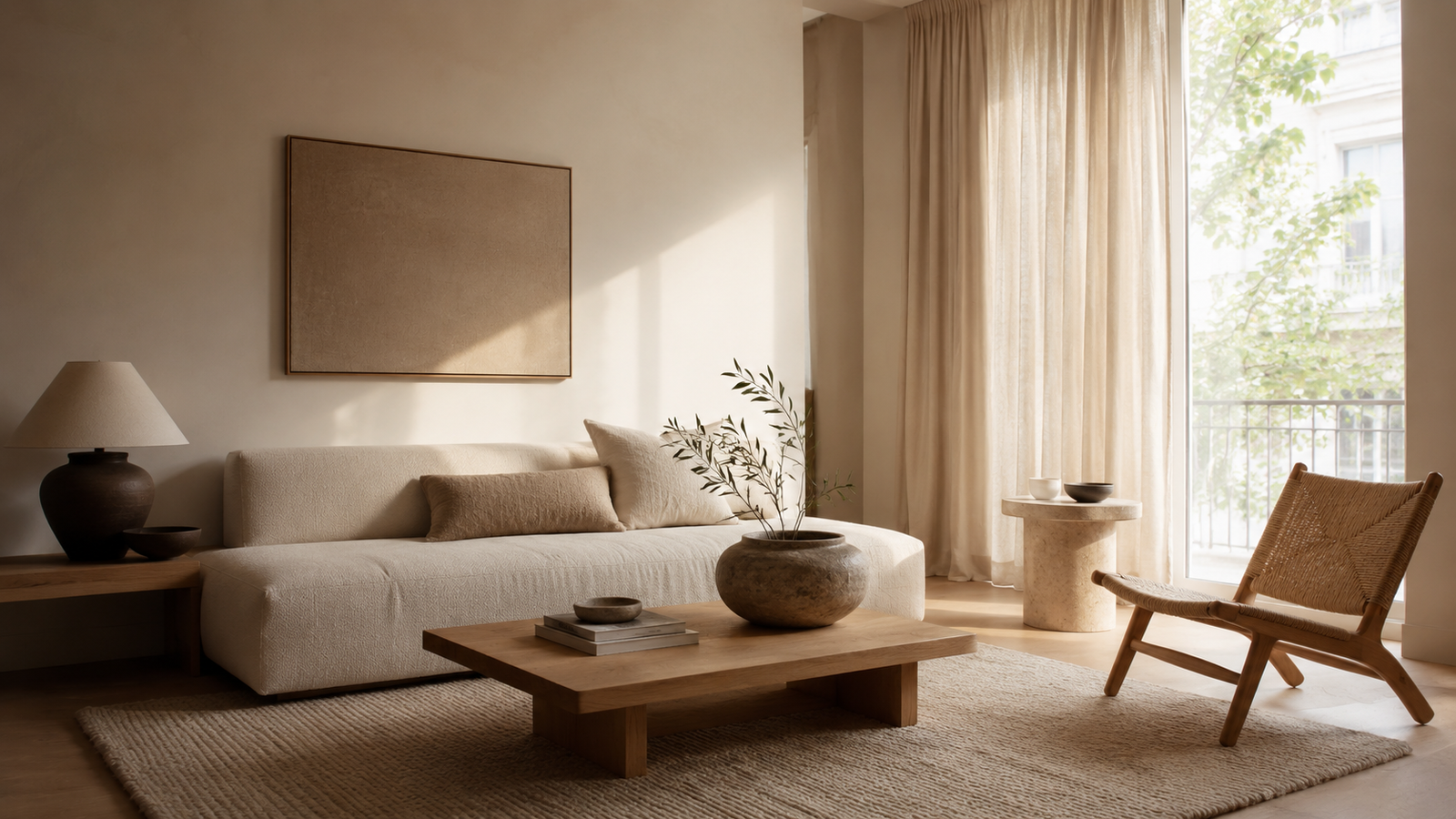
A linen curtain softening a hard window.
A low-profile sofa opening up a sightline.
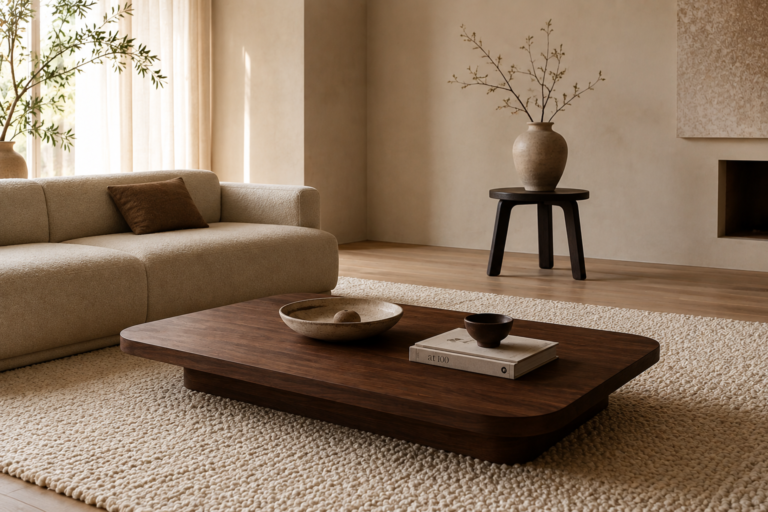
A natural oak table warming an otherwise plain room.
A sculptural lamp replacing the harshness of one overhead fixture.
A large piece of artwork giving an empty wall a sense of identity.
None of these changes requires a major renovation.
But together, they can completely change how a small apartment feels.
Because the problem with many small apartment rooms isn’t necessarily their size.
“If you are working with a truly open-concept footprint, check out these studio apartment hacks to maximize every square foot.”
It’s the way they’re furnished, lit, and layered.
A room can be genuinely small and still feel calm, open, and inviting. Another can have considerably more square footage and somehow feel cramped.
The difference often comes down to scale, visual weight, texture, light, and what you choose to leave empty.
That is where warm minimalism becomes particularly useful.
Instead of trying to make your apartment look bigger by stripping everything away, you create a space that feels spacious and warm at the same time.
And the best part?
You can do it without major renovations.
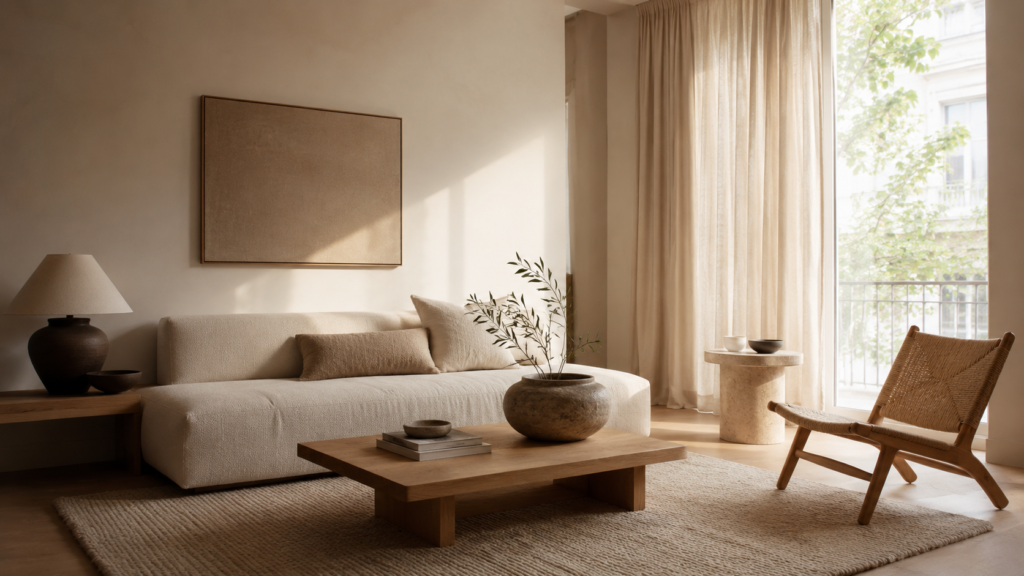
Table of Contents
Why Small Apartments So Often Fall Into the “Rental Trap”
There is a particular look that happens when a rental apartment hasn’t been given much thought.
Bright white walls.
Generic ceiling lighting.
Furniture pushed against every available wall.
Small decorative objects scattered across surfaces.
Thin curtains.
Visible cables.
Furniture that technically fits but feels too bulky for the room.
“You can easily transform a sterile apartment by bringing organic textures and tactile comfort into your rooms through linens and wood accents.”
None of these choices is necessarily wrong.
The problem is what happens when they appear together.
The room starts to feel temporary.
Functional, but not personal.
Clean, but not calm.
Furnished, but not considered.
This is the rental trap.
Because you know you can’t make permanent changes, it’s tempting to simply accept the apartment as it is.
But renter-friendly decorating doesn’t mean settling for a space that feels unfinished.
You can completely change the atmosphere through the elements you can control.
Furniture.
Lighting.
Curtains.
Artwork.
Rugs.
Mirrors.
Textiles.
Natural materials.
The goal isn’t to disguise the fact that you rent.
It’s to make the space feel like it belongs to you.
Start With the Feeling, Not the Furniture
Before buying anything, decide how you want your apartment to feel.
Not how you want it to look.
Feel.
Maybe you want:
Quiet.
Warm.
Grounded.
Spacious.
Soft.
Collected.
Unhurried.
That feeling becomes your filter.
If something looks beautiful but makes the room feel visually heavy, it may not be the right choice.
If a simple linen curtain makes the entire apartment feel softer, it may be more valuable than another decorative object.
This is the difference between decorating a small apartment and simply filling one.
You’re not trying to maximize what fits.
You’re trying to maximize how the space feels.
Fix #1: Give Boring Apartment Walls More Depth
One of the fastest ways for a rental apartment to feel temporary is a room surrounded by completely bare white walls.
White isn’t inherently bad.
But a large expanse of flat, bright white can sometimes make a room feel more like a blank rental shell than a finished home.
And if repainting isn’t an option, you need to think beyond paint.
Think in layers.
Large-scale artwork.
Linen curtains.
Textile wall hangings.
Removable wallpaper where permitted.
Oversized mirrors.
Wood-framed artwork.
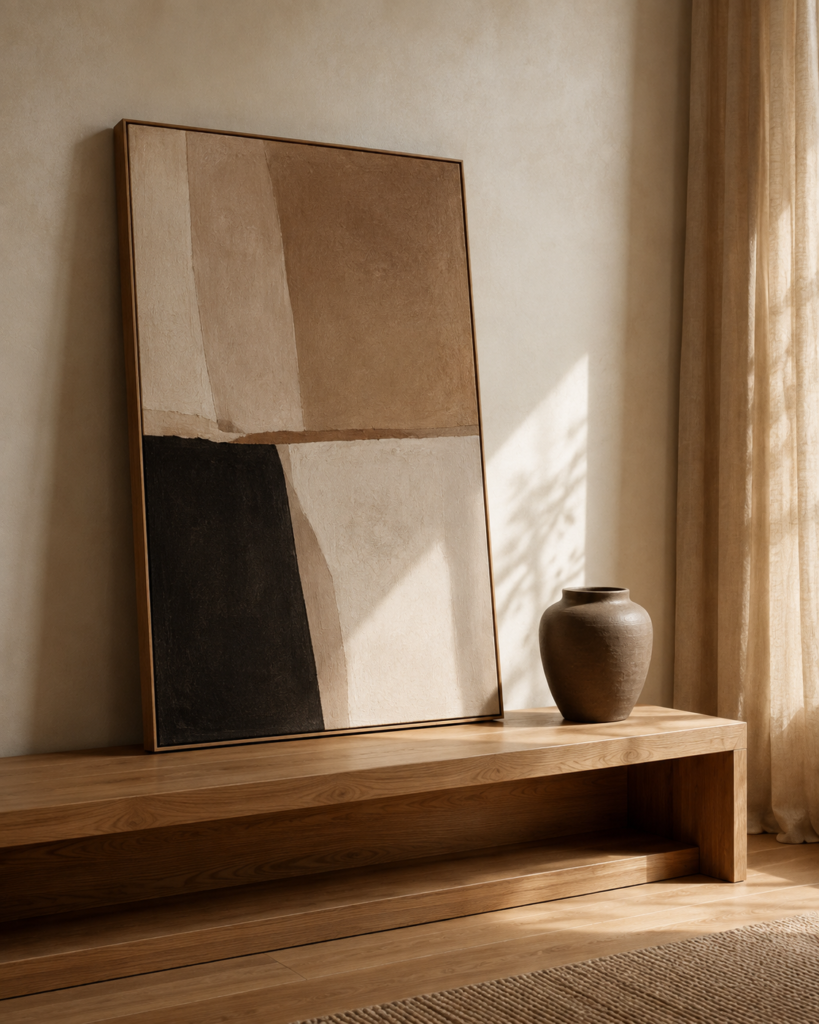
Leaning artwork.
Architectural photography.
A large canvas.
The goal isn’t to cover every empty section of wall.
It’s to give the architecture visual depth.
One substantial piece can often do more for a small apartment than an entire collection of tiny decorations.
Choose Scale Before Quantity
This is especially important in small apartment interiors.
A common instinct is to decorate a small room with small objects.
But lots of tiny objects can actually make the space feel busier.
One large artwork can create a stronger focal point than six small prints.
One substantial mirror can visually expand the room more effectively than several small decorative mirrors.
One long linen curtain can introduce more softness than multiple small textile accents.
Small room does not mean small everything.
It means choosing carefully.
Scale is one of the most overlooked tools in small-space interior design.
The right large object can actually make a compact room feel more intentional and less cluttered.
Let Curtains Change the Architecture
Curtains are one of the most underrated renter-friendly decorating tools.
They add softness.
They introduce texture.
They frame windows.
And they can visually change the proportions of a room.
Instead of treating curtains as something that simply covers a window, think of them as part of the room’s architecture.
Long linen or linen-look curtains can draw the eye upward and make a wall feel taller.
A wider curtain treatment can make a window feel more substantial.
For a warm minimalist apartment, consider tones such as natural flax, oatmeal, warm ivory, soft sand, and mushroom.
The fabric itself becomes part of the design.
And unlike permanent architectural changes, curtains can move with you when the lease ends.
Let Artwork Do More Work
In a small apartment, artwork shouldn’t simply fill an empty wall.
It should help establish the room’s identity.
Look for pieces with soft architectural forms, muted landscapes, abstract shapes, earthy tones, black-and-cream photography, natural textures, or minimal line work.
The most important consideration is scale.
A piece that is too small can make the wall feel even larger and emptier.
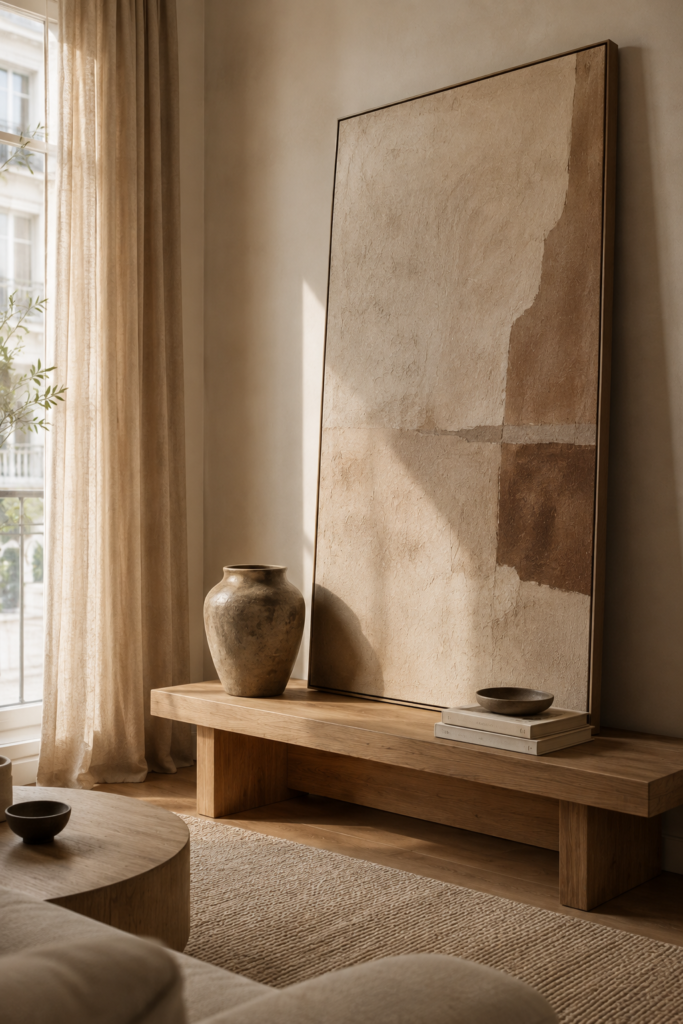
A substantial artwork can anchor the entire room.
And if drilling isn’t an option, leaning artwork against a wall can create a relaxed editorial quality while remaining renter-friendly.
Fix #2: Choose Low-Profile Furniture
This is where small-space design becomes less about decoration and more about visual geometry.
Furniture can make a room feel significantly smaller than it actually is.
Especially when it is tall, bulky, deep, or heavy-looking.
Low-profile furniture creates a different visual effect.
It preserves sightlines.
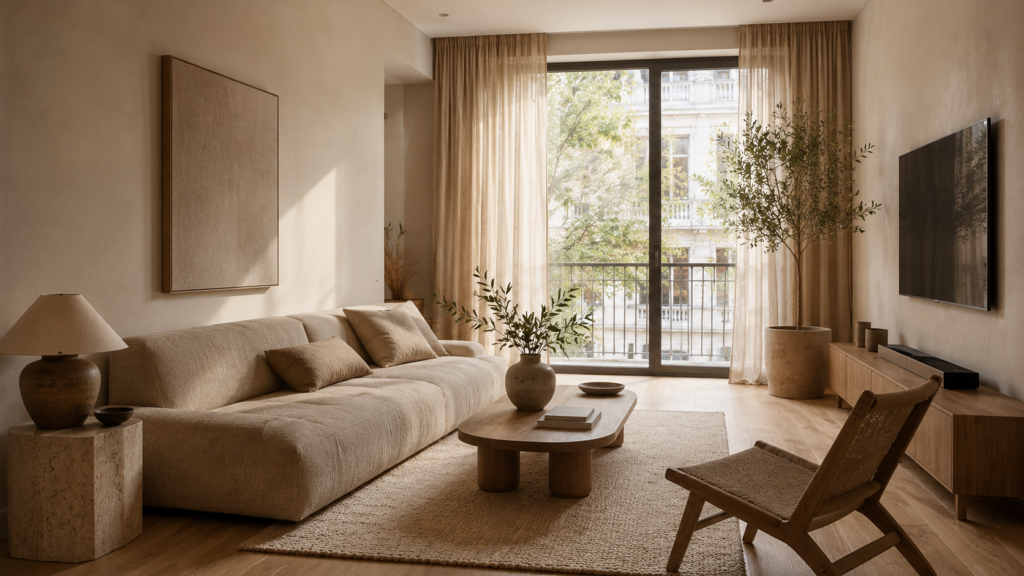
When you can see more of the wall and more of the floor, the room often feels more open.
A low sofa.
A streamlined coffee table.
A lower media console.
A slim-profile lounge chair.
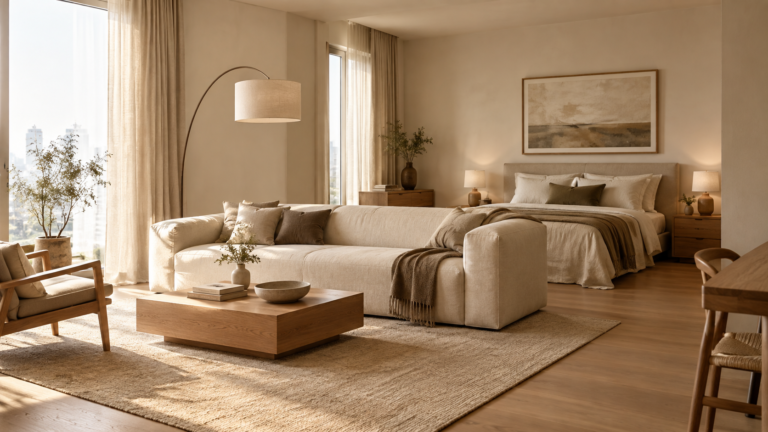
A low bed frame.
These pieces create a more horizontal composition.
And when more of the room remains visually open, the apartment can feel calmer and more expansive.
The Floor Is Part of Your Design
One of the easiest ways to make a small room feel crowded is to visually interrupt too much of the floor.
This doesn’t mean avoiding rugs or furniture.
It means paying attention to what the eye can see around them.
Furniture with visible legs can preserve visual continuity beneath the piece.
A rug with enough surrounding floor space can define an area without making the entire room feel covered.
And keeping clear pathways from the entrance toward windows or major architectural features can make a surprisingly large difference.
The more uninterrupted floor and sightlines you can see, the more spacious the room tends to read.
Your floor isn’t simply something furniture sits on.
It’s part of the visual composition.
Don’t Push Everything Against the Walls
This is one of the most common small-apartment habits.
The room is small, so every piece gets pushed against a wall.
It seems logical.
But it can actually make the layout feel fragmented.
Sometimes pulling a sofa slightly away from the wall creates a more intentional seating zone.
A narrow console can sit behind it.
A floor lamp can define the corner.
A rug can connect the pieces.
The result may occupy roughly the same amount of space, but it feels considerably more designed.
Small spaces still need zones.
The trick is creating them without building walls.
Use One Strong Furniture Silhouette
Small apartments benefit from visual consistency.
If every furniture piece has a completely different silhouette, the room can feel fragmented.
Instead, choose a few dominant forms.
Perhaps a low linen sofa, a rounded oak coffee table, a simple lounge chair, and a slim console.
Then allow the accessories to remain quiet.
This creates cohesion without requiring matching furniture.
The goal isn’t uniformity.
It’s rhythm.
Fix #3: Layer Sensory Textures
This is where a small apartment begins to feel like a sanctuary rather than simply a well-organized room.
Texture gives neutral interiors depth.
Without it, beige can look flat.
With it, beige becomes atmospheric.
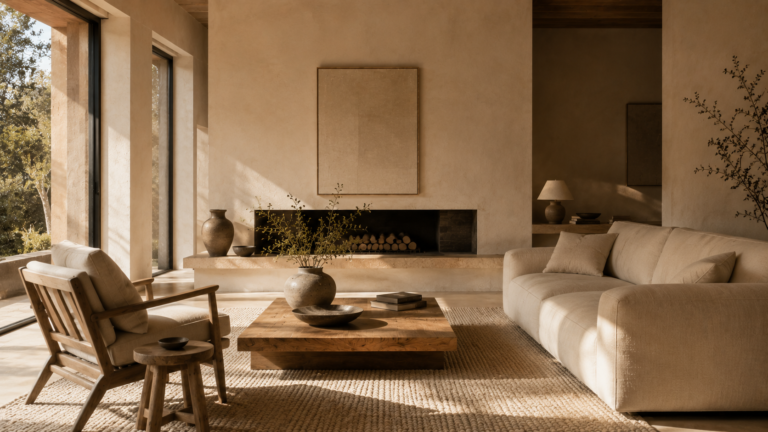
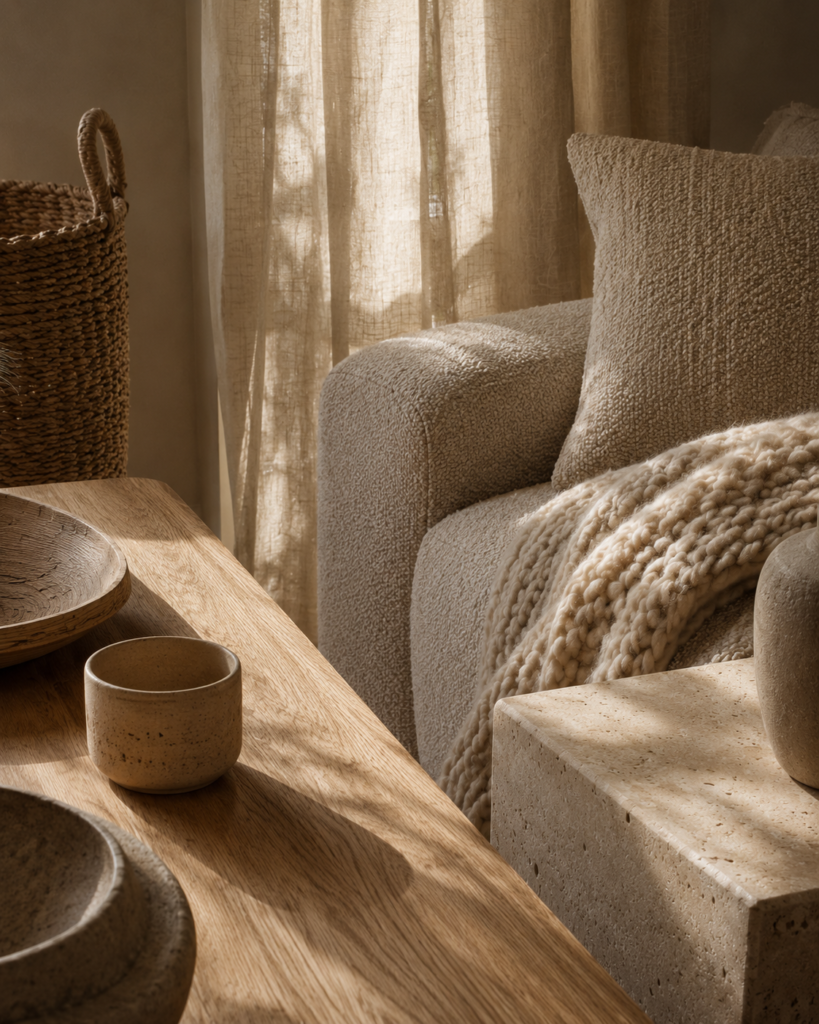
Think about combining linen, bouclé, wool, natural wood, stone, ceramic, cotton, jute, rattan, and brushed metal.
You don’t need all of them.
Three or four carefully repeated materials can be enough.
A linen curtain.
A wool rug.
An oak coffee table.
A handmade ceramic bowl.
Suddenly, the room has a tactile vocabulary.
This is one of the defining principles of warm minimalist interior design: when visual noise is reduced, material quality becomes more important.
Let Natural Wood Warm Up the Room
Natural wood is particularly powerful in small apartment interiors because it adds warmth without requiring much visual complexity.
Oak.
Ash.
Walnut.
Light timber.
Even a single substantial wooden element can shift the atmosphere of a room.
A coffee table.
A console.
A stool.
A shelving unit.
A wooden frame.
Choose pieces with visible grain and relatively simple silhouettes.
The material provides the interest.
The shape can remain restrained.
This is why natural wood works so well with a warm minimalist palette.
It introduces warmth without introducing visual chaos.
Layer Lighting Instead of Relying on One Ceiling Fixture
If there is one change that can dramatically alter the mood of a small apartment, it is lighting.
“Rental lighting can feel harsh, but you can fake custom architecture by layering ambient lighting and soft fixtures to create soft shadows.”
Many rental apartments rely heavily on a single ceiling fixture.
It may technically illuminate the room.
But illumination isn’t the same thing as atmosphere.
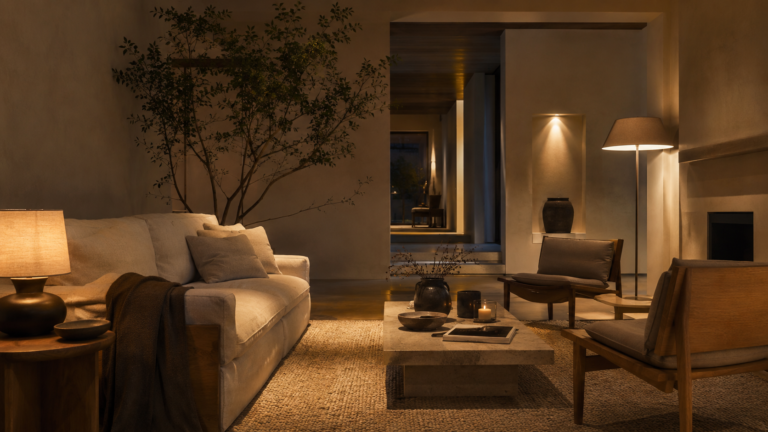
A warm minimalist apartment benefits from several smaller sources of light at different heights.
Consider a floor lamp beside the sofa, a table lamp on a console, a plug-in wall light, a small reading lamp, or a softly illuminated corner.
This creates layers.
It gives the eye multiple points of warmth without filling the room with more objects.
And because lighting takes up very little physical space, it can be especially effective in a compact apartment.
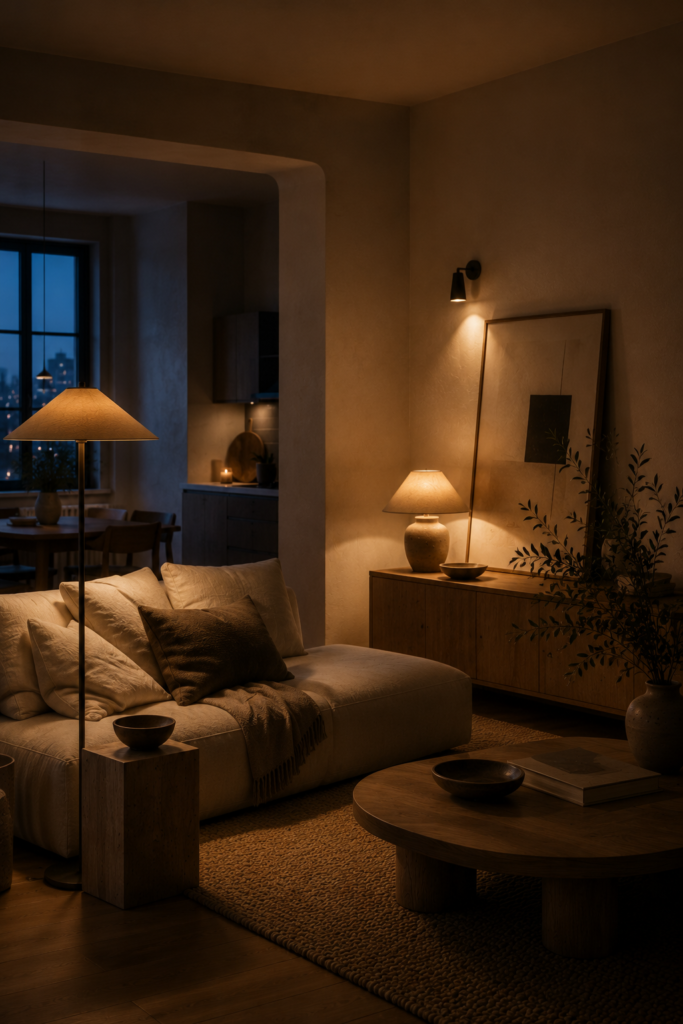
Use Warm Light to Change the Mood
The same apartment can feel completely different under different lighting.
Cool, bright light tends to flatten warm materials.
Warm light brings out the richness in wood, linen, beige, taupe, stone, and ceramic.
For evening, think about creating pools of light rather than illuminating every corner equally.
A softly lit reading chair.
A glowing table lamp.
A warm floor lamp beside the sofa.
A subtle light near artwork.
The darkness between these areas isn’t a flaw.
It creates depth.
And depth makes a small room feel more atmospheric.
Make Your Small Apartment Feel Bigger Without Making It Feel Empty
This is where many small-space decorating strategies go wrong.
They focus entirely on making the room look larger.
Everything becomes white.
Furniture becomes minimal.
Decor disappears.
The room technically feels spacious.
But it also feels cold.
The better goal is spaciousness with warmth.
Keep clear sightlines.
Use lighter neutral foundations.
Choose furniture carefully.
Introduce natural materials.
Add tactile textiles.
Use mirrors strategically.
Keep major surfaces edited.
Then allow a few meaningful elements to create character.
You don’t need to choose between spacious and cozy.
A well-designed small apartment can be both.
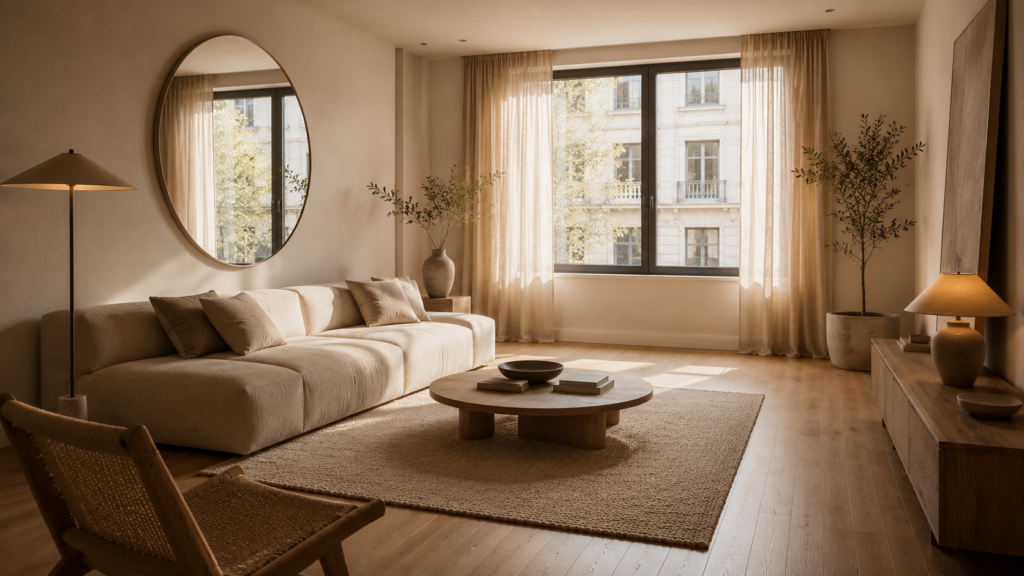
Create One Visual Focal Point Per Zone
A small apartment becomes easier to understand when each area has a clear focal point.
In the living room, it might be a large artwork.
In the reading corner, a beautiful chair and lamp.
In the dining area, a sculptural pendant.
In the bedroom, a tactile headboard or carefully dressed bed.
The mistake is giving every corner its own statement piece.
That creates competition.
Instead, allow one element to lead.
Let everything else support it.
This creates visual hierarchy without adding walls or square footage.
The Small-Space Rule: Repeat, Don’t Scatter
If you introduce natural oak, repeat it.
If you choose warm ivory, let it appear in several places.
If you introduce linen, repeat that softness through curtains, cushions, or upholstery.
Repetition makes a small apartment feel visually larger because the eye doesn’t have to process a completely new material or color at every turn.
This is especially useful when working with a warm minimalist palette.
Warm ivory.
Soft beige.
Taupe.
Natural oak.
Stone.
Muted brown.
A restrained palette allows texture to become the source of variation.
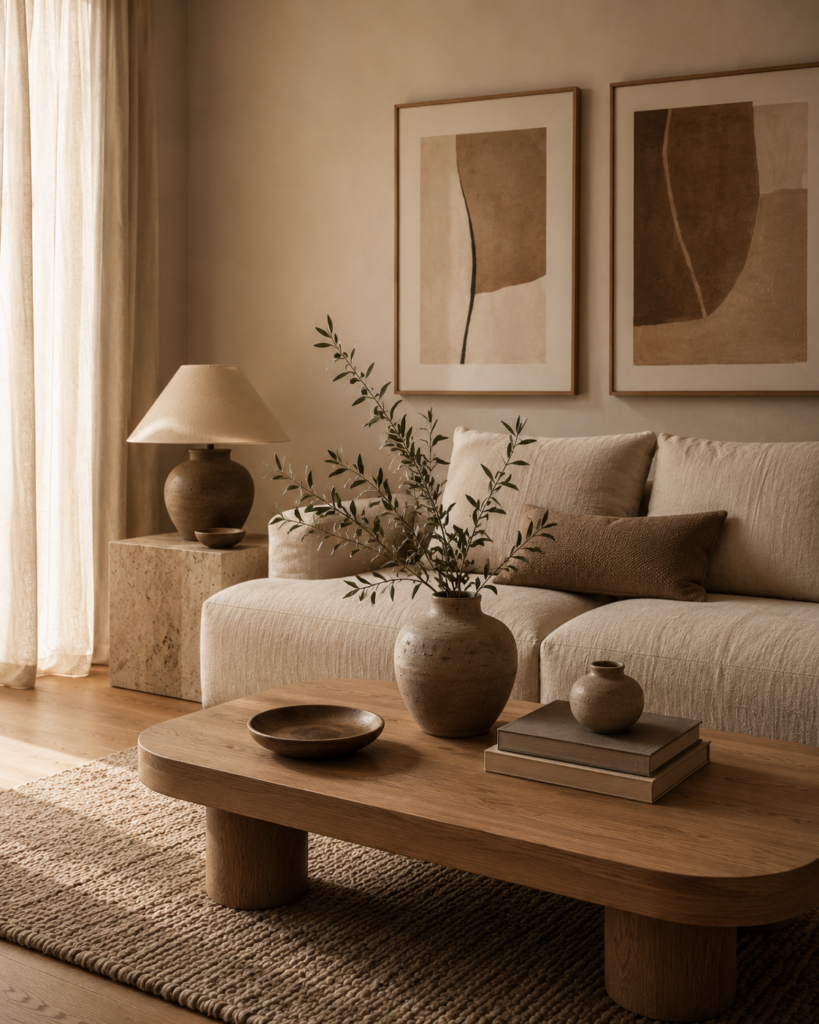
Hide the Things That Make a Rental Feel Temporary
Some of the biggest improvements won’t be decorative at all.
They’ll come from hiding visual noise.
Cable bundles.
Power strips.
Cleaning products.
Random packaging.
Excessive remote controls.
Plastic storage containers.
Visible chargers.
Temporary-looking furniture.
These details can undermine an otherwise beautiful room.
Use baskets.
Closed storage.
Cable management.
Decorative boxes.
A tray for everyday objects.
The goal isn’t perfection.
It’s simply deciding what deserves to remain visible.
A warm minimalist home isn’t one where nothing is visible.
It’s one where the visible elements feel intentional.
Add Personality Without Adding Clutter
A warm minimalist apartment shouldn’t feel anonymous.
The easiest way to add personality without visual chaos is through a few meaningful objects.
A piece of artwork you genuinely love.
A handmade ceramic.
A vintage wooden stool.
A favorite book.
A framed photograph.
A small collection of objects from your travels.
These things matter because they tell the room something about the person living there.
Minimalism becomes much more interesting when it reflects a real life rather than a showroom.
Your apartment doesn’t need to look expensive.
It needs to look considered.
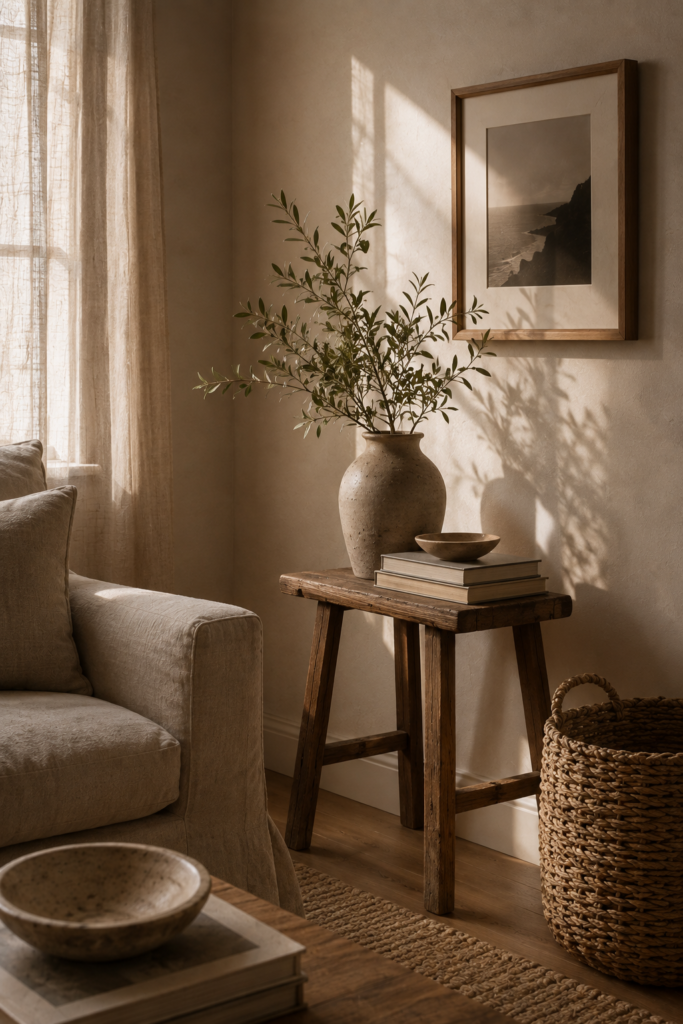
The Five-Minute Rental Sanctuary Reset
When your apartment starts feeling cluttered or cold, don’t immediately buy something.
“Before trying to fill empty corners, start by clearing out the hidden visual mistakes making your minimalist living room look messy…”
Try this instead.
Clear one surface.
Turn off the overhead light.
Switch on your warmest lamp.
Open the curtains.
Remove three objects that don’t need to be visible.
Straighten the largest textile in the room.
Move one piece of furniture slightly if the layout feels cramped.
Then step back.
Sometimes the room doesn’t need another object.
It needs a better relationship between the objects already there.
What to Spend Money On—and What Not To
If you’re decorating a small rental, budget matters.
Don’t spend heavily on temporary trends that you’ll replace quickly.
Prioritize the pieces that affect the room most:
A well-scaled sofa.
A quality rug.
Good curtains.
A beautiful lamp.
Natural wood furniture.
One substantial piece of artwork.
These elements establish the room’s foundation.
Accessories can come later.
A warm minimalist home is built through layers over time.
It doesn’t need to be completed in one shopping trip.
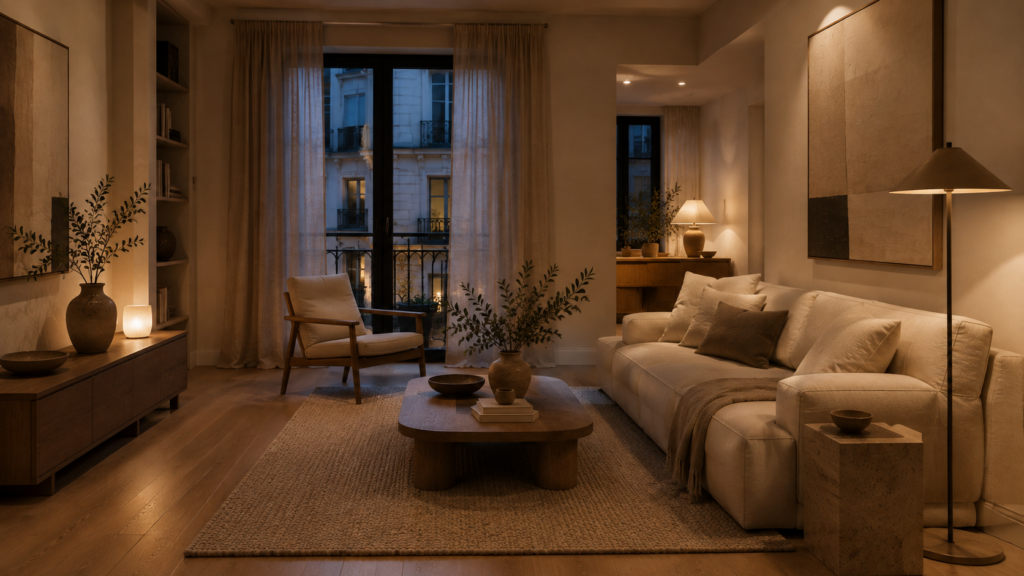
The Havelume Small Apartment Checklist
Before considering your room finished, ask:
Does the furniture fit the scale of the room?
Can I see enough floor around the major pieces?
Are the sightlines toward windows and doorways clear?
Is there one clear focal point in each zone?
Are my walls adding depth rather than simply sitting empty?
Do the curtains soften the architecture?
Have I introduced natural wood?
Are the textiles tactile?
Do I have more than one source of light?
Does the evening lighting feel warm and layered?
Are cables and everyday objects visually controlled?
Does the color palette feel cohesive?
Does the room feel personal without feeling cluttered?
And most importantly:
Does it feel like a sanctuary?
A Small Apartment Can Still Feel Like Home
There is a strange assumption built into the way we talk about small homes.
We often treat square footage as though it determines how a home is allowed to feel.
It doesn’t.
A small apartment can feel generous.
A rental can feel permanent.
A neutral room can feel warm.
And a minimalist home can feel deeply personal.
The transformation doesn’t necessarily come from adding more.
It comes from making better decisions about what is already there.
A linen curtain can soften a hard architectural edge.
A low sofa can open a sightline.
A natural oak table can introduce warmth.
A wool rug can make a room feel grounded.
A lamp can completely change the atmosphere after sunset.
And a single meaningful piece of artwork can make a rental finally feel like yours.
The Beauty of Not Renovating
Perhaps the most interesting thing about creating a warm minimalist apartment is that you don’t have to change the architecture to change the experience of living in it.
You can work with what you have.
The existing walls.
The existing windows.
The existing floors.
The existing footprint.
Instead of fighting the apartment, you learn how to work with it.
That mindset is important.
Because good interior design isn’t always about correcting a space.
Sometimes it is about understanding it.
A narrow room might benefit from lower furniture.
A dark corner might need a lamp rather than another decorative object.
A blank wall might need one beautiful piece rather than ten small ones.
A tiny living room might need less furniture, but better furniture.
Once you stop asking, “How can I fit more into this room?” and start asking, “What does this room actually need?” the decisions become much easier.
Warm Minimalism Is About More Than Aesthetic
At its best, warm minimalism isn’t simply a design trend.
It’s a way of thinking about the home.
Instead of constantly adding, you become more selective.
Instead of chasing perfection, you pay attention to atmosphere.
Instead of filling every empty surface, you allow negative space to exist.
Instead of choosing materials only for appearance, you notice how they feel.
And instead of designing a room for photographs alone, you design it for the ordinary moments that happen there.
Morning coffee beside the window.
A book opened on the sofa.
Soft evening light across the floor.
Bare feet against a wool rug.
A quiet dinner at a small wooden table.
These are the moments a home is actually made for.
Your Small Apartment Doesn’t Need More. It Needs Intention.
The best small apartment decorating ideas aren’t about squeezing more into less space.
They’re about making less feel better.
Start with scale.
Choose furniture that allows the room to breathe.
Soften the architecture with textiles and artwork.
Introduce natural wood and tactile materials.
Replace flat overhead illumination with layers of warm light.
Keep the palette restrained.
Hide visual noise.
Repeat materials and colors so the apartment feels cohesive.
“Instead of stark white, ground your rental rooms using quiet neutral color combinations that bring warmth to a minimalist home…”
And leave enough empty space for the room to breathe.
You don’t need to renovate your apartment to make it feel considered.
You don’t need a bigger living room.
You don’t need an entirely new furniture collection.
You may simply need to look at the room differently.
Because a sanctuary isn’t created by square footage.
It is created by atmosphere.
And atmosphere is something you can build, layer by layer, with the space you already have.
That is the quiet promise of warm minimalism:
You can live with less without living with less feeling.
Your apartment can be small without feeling limited.
It can be rented without feeling temporary.
And it can be minimalist without ever feeling empty.
Sometimes, the most meaningful transformation is the one that leaves the walls exactly where they are.