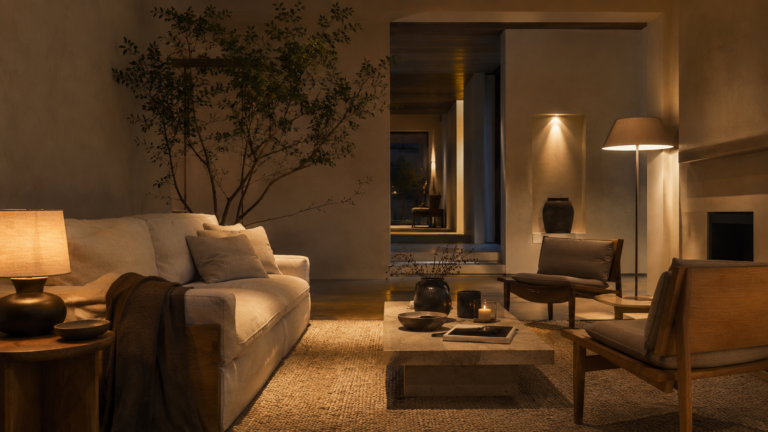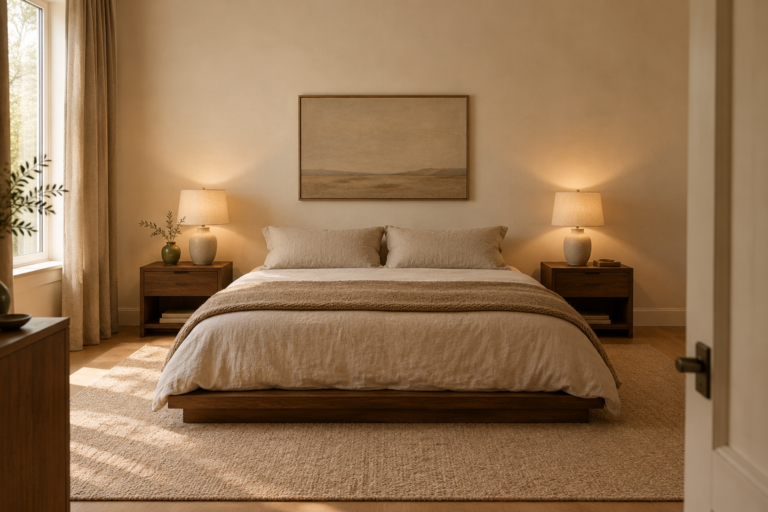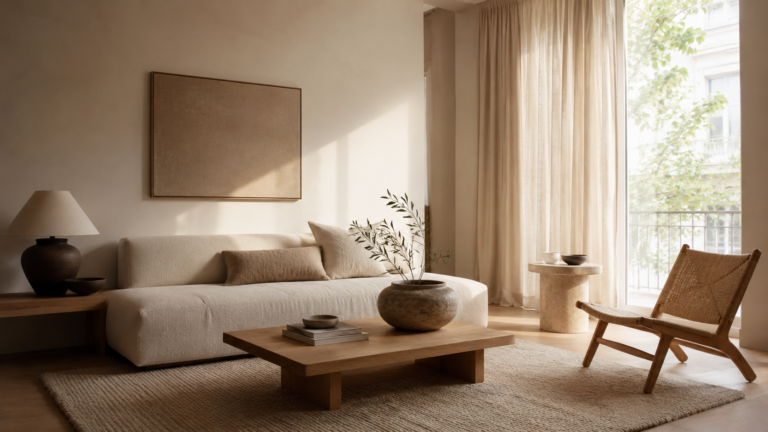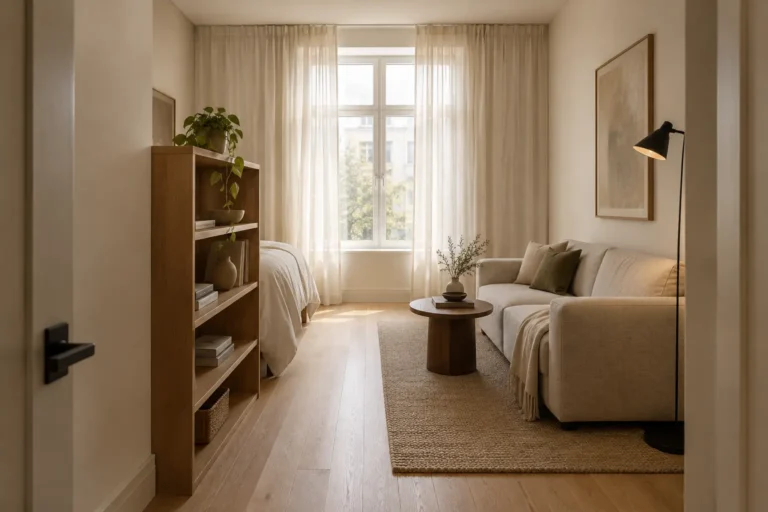
Warm Minimalist Interior Design Trends: Khaki, Jade, Wood
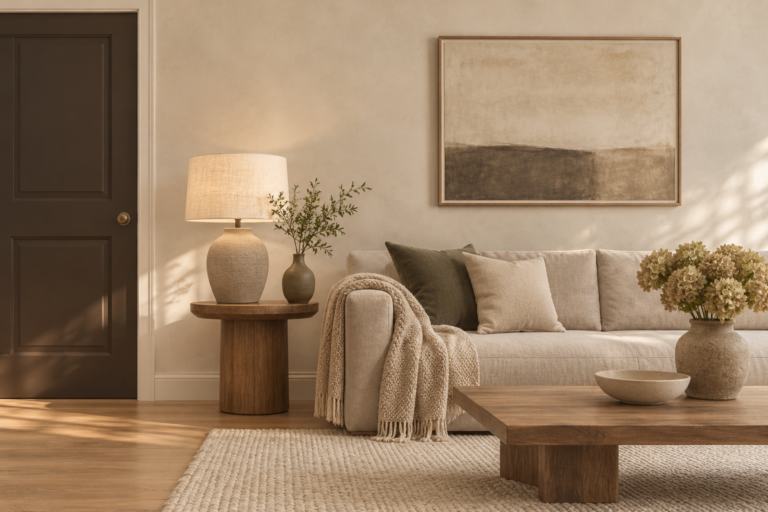
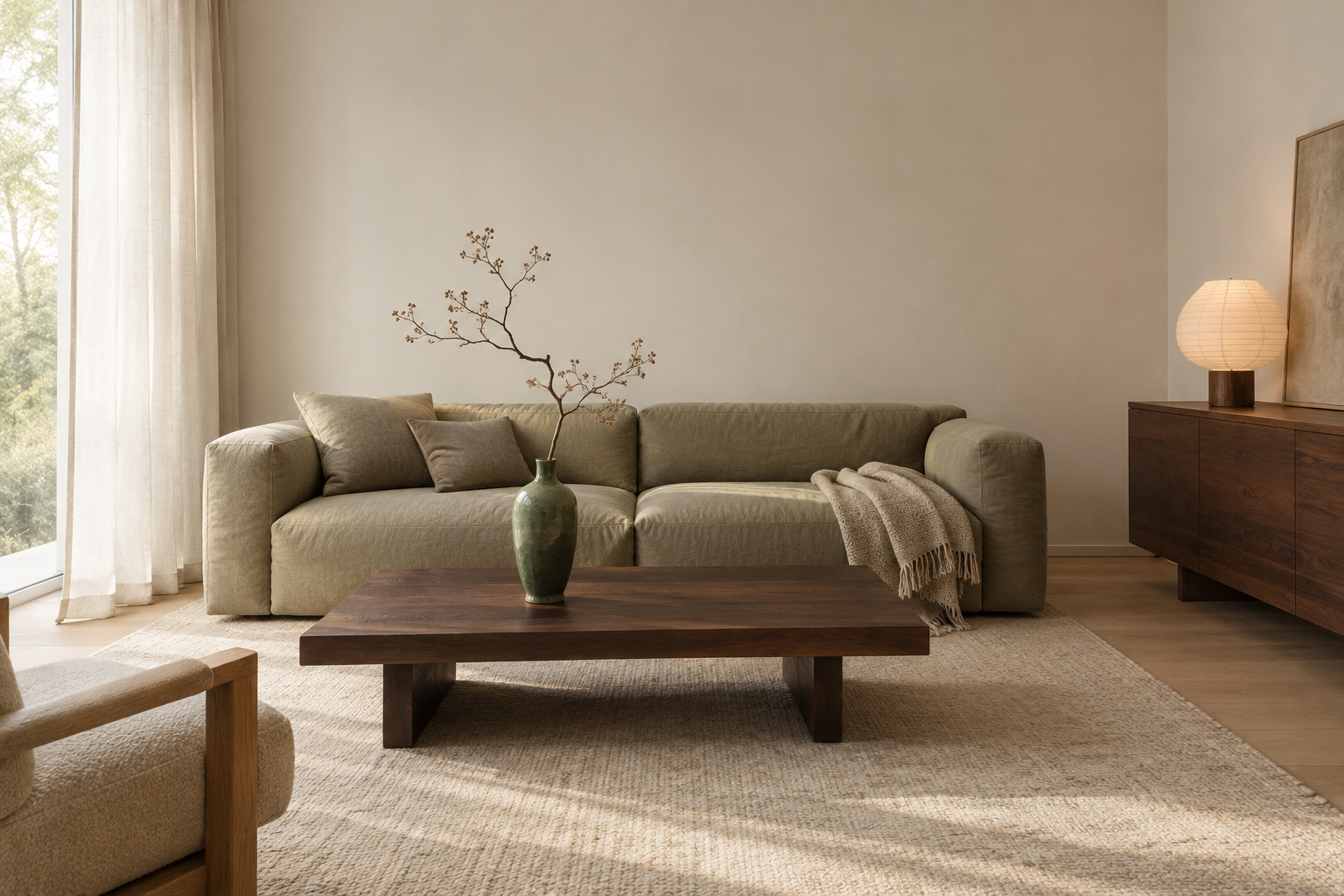
The version of warm minimalism showing up in 2026 keeps a quiet neutral base and adds color in measured amounts: khaki on the biggest soft surfaces, dark wood for weight, and jade in no more than three small objects. Hold to that split and a plain room starts to look layered instead of busy. Below you get the ratio, the swatch test that picks the right khaki, and the mistakes that make this palette look heavy.
Warm minimalist interior design trends for 2026 combine a quiet neutral base with three accents: khaki for large soft surfaces, dark wood for one or two heavy pieces, and jade for small objects. A workable split is about 70 percent base neutrals, 20 percent khaki and wood, and 10 percent jade.
Table of Contents
Warm minimalist interior design trends in 2026: what changed from plain beige
The change is mostly about undertone and depth, not about adding more things. Earlier beige minimalism leaned on pale, flat neutrals, often with a pink or yellow cast, and white trim to keep everything light. The current look keeps the same low object count but moves the neutrals toward olive and stone, brings dark wood back, and adds one cool green so all that warmth does not turn sweet.
Three shifts account for most of what you will see. Neutrals now carry a green or gray undertone, which is where khaki comes in. Walnut and espresso finishes are returning after several years of pale oak and ash. And a single medium depth green, with jade the most common, serves as the one cool note. Trend reports differ on exact shade names, so treat these three as a direction rather than a fixed formula.
Myth versus reality. Myth: minimalism means everything has to be pale. Reality: minimalism is about how many things compete for attention. A dark walnut console with one jade vase on it is still a minimalist arrangement, while a white room with twenty small decor items is not. A second myth is that warm means yellow. Warm here means a golden or brown undertone, and a khaki with a faint olive cast reads warm as long as it sits near wood and soft light.
Add this sentence: If your base neutrals still feel flat, the minimalist neutral colour palette guide shows how to layer them.
Khaki interior decor: how to pick the right shade and where it goes
Use khaki on your largest soft surfaces: the sofa, the curtains, the rug or the wall paint. It is a neutral with a touch of olive, sitting between sand and moss, and it anchors a room without the weight of a dark color.
Choosing it is where most people slip, because the word khaki covers a wide range. Hold the swatch against a plain sheet of white paper. If it looks greenish yellow, it is true khaki. If it looks pink or peachy, it is a beige and will fight the jade later.
Light changes the result more than you would expect. In a north facing room khaki can turn gray green, and in a south facing room it turns golden. Tape a swatch about two feet square to the wall, or drape the fabric sample, and look at it in the morning, at midday and under your evening lamps for two or three days before you commit.
Here is the part most people skip: choose the sofa or curtain khaki one to two shades deeper than the wall. If both match exactly, the furniture dissolves into the room and the layout looks flat. Khaki linen curtains also need a lining if the window gets direct sun, since unlined linen lets in glare and shows every fold.
Jade green accents: how much is enough in a neutral room
Three objects is enough. Jade is a blue leaning green of medium depth, and in a room built from warm tones it acts as the only cool note, which is why a small amount does so much.
Good candidates include a glazed ceramic vase, one cushion, a plant pot, a glass bottle, a throw folded over a chair arm, or a framed print with a jade field. Choose different sizes, for example one tall, one medium and one small, so the color does not read as a matched set.
Then place them apart. Put the second jade item across the room from the first and the eye travels instead of stopping at one spot. A glossy glaze helps too, because flat matte jade tends to look gray beside khaki.
Painting a wall jade is a different project. It can look striking against dark wood, but it commits you to far more than 10 percent of the room, so treat it as a bolder variation on this plan and test a large swatch first.
Dark wood minimalist living room: weight without heaviness
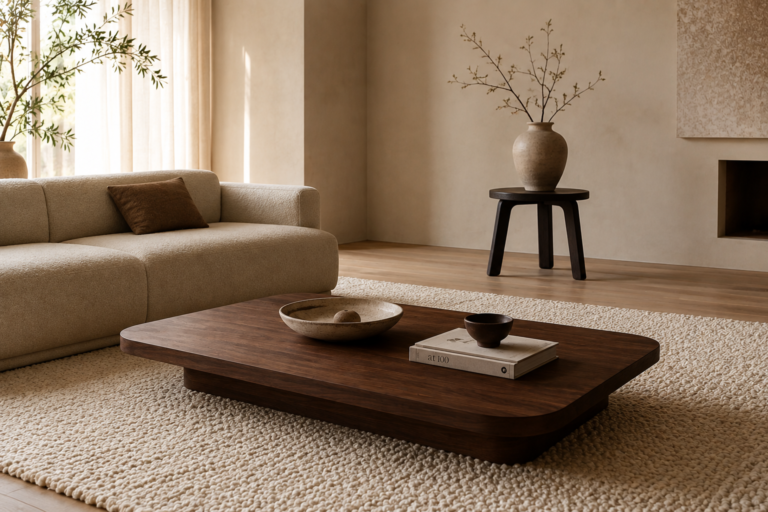
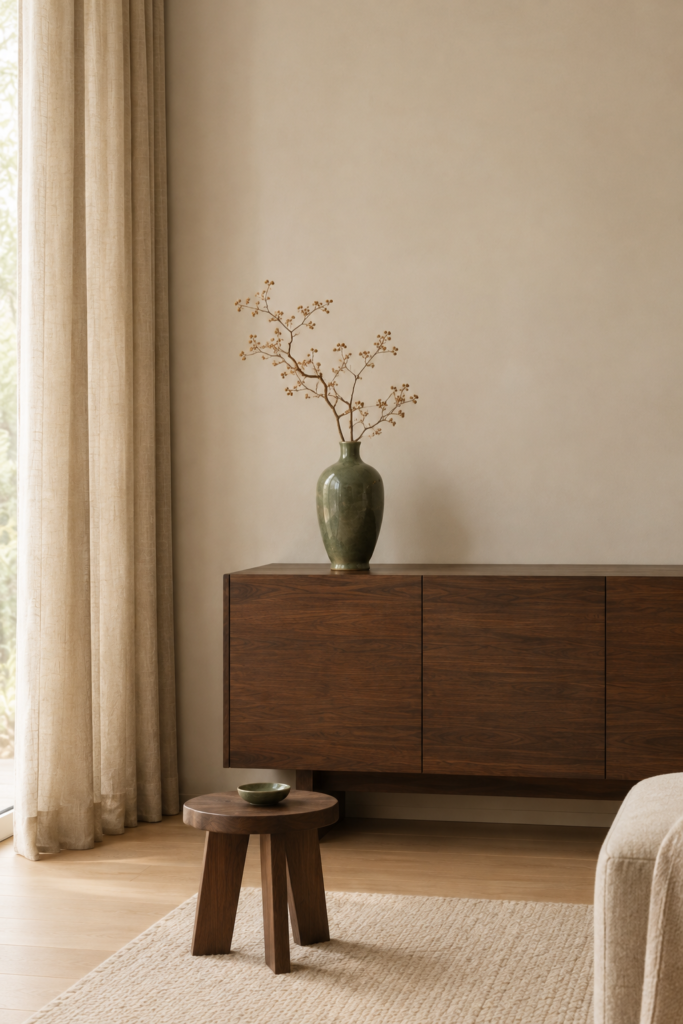
Choose one large dark wood piece and one smaller echo, not a matching set. A walnut media console with a small walnut side table is plenty. Dark wood is the heaviest element in this palette, so it works best low and wide: a console, a coffee table, a sideboard.
For more on why height matters, see how low profile furniture changes a warm minimalist room.
Wood tones are where many costly mistakes happen. Keep to two wood tones at most, and make them clearly different rather than nearly matching, so the pairing reads as a decision instead of a failed match. Undertones matter as well, since a red brown walnut beside a gray brown oak tends to look off. If you already own pale oak pieces, a short guide to mixing wood tones helps before you add walnut.
Floors decide the rest. With a light oak floor, dark furniture gives you strong contrast. With a dark floor, break it up with a pale or khaki rug so the furniture does not sink into the ground. Dark wood also absorbs light, so use warm white bulbs, around 2700K, rather than cool white ones, which flatten both khaki and walnut.
Pair those bulbs with layered lighting instead of a single overhead fixture.
In a small room, roughly 12 by 12 feet or less, stay at two dark pieces in total and keep them below eye level.
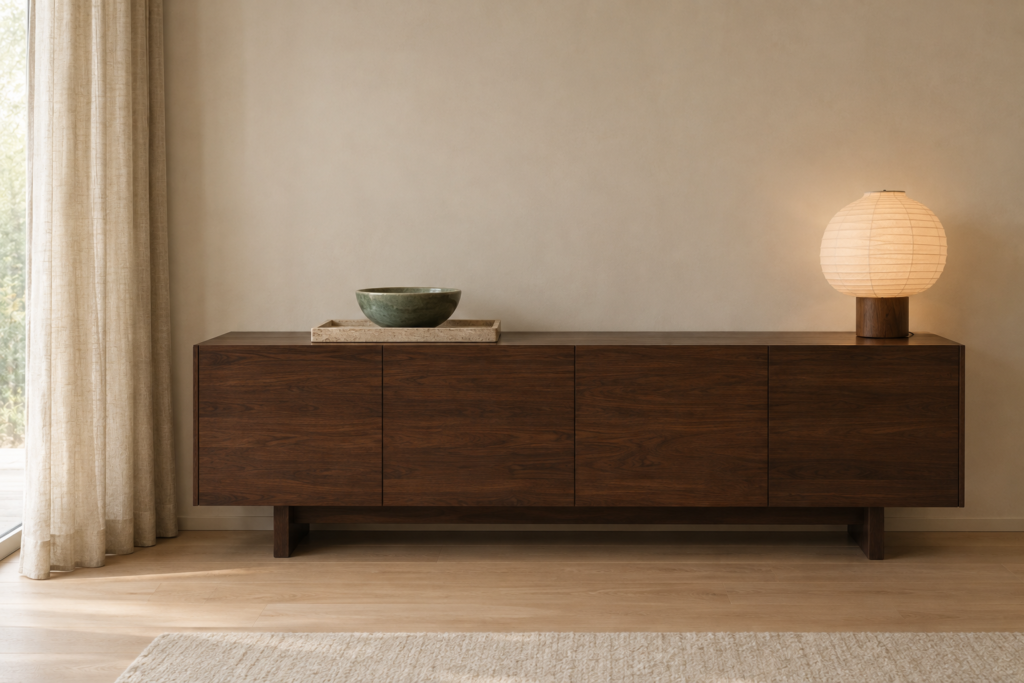
Organic modern decor ideas that tie the three colors together
Texture does the work that extra color would otherwise do. These six moves keep the palette from looking flat:
1. Layer two textures in the same khaki, such as a linen curtain over a wool or jute rug.
2. Use jade in a glossy material, either glazed ceramic or glass, so it catches light against matte khaki.
3. Pick a matte, oiled finish for dark wood so the grain shows instead of a glossy reflection.
4. Add one stone piece, for example a honed travertine tray or side table, to bridge the sand and wood tones.
5. Choose a paper or linen shade lamp, which gives a soft glow that suits all three colors.
6. Leave about a third of each shelf empty. The gaps are part of the look.
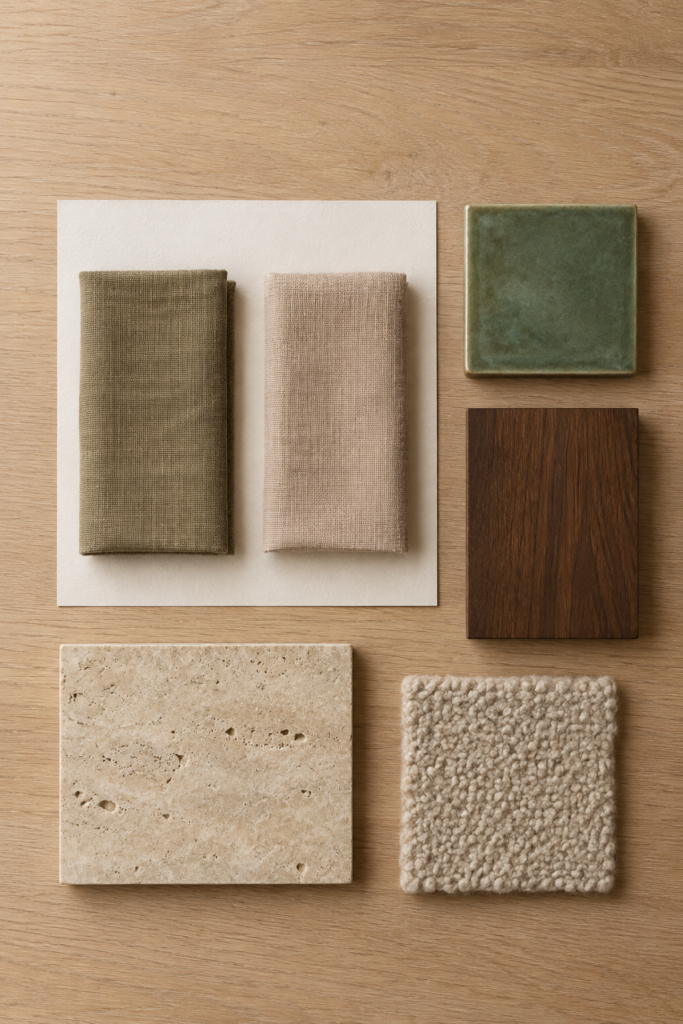
To build more texture without adding color, read the guide to organic textures in minimalist rooms.
The Quiet Room Ratio: how to add color to a neutral room, step by step
The Quiet Room Ratio is a simple way to measure how much color a minimalist room can carry. Roughly 70 percent of what you see stays in light neutrals such as walls, ceiling, floor and large rugs. About 20 percent is shared by khaki and dark wood. The last 10 percent or less is jade. It is a visual estimate, not a measurement, so judge it from the doorway.
1. Fix the base. Walls, ceiling and the largest rug stay a light warm neutral. If you are repainting, a warm white paint keeps the khaki from looking dull.
Not sure which neutrals to pair with your walls? These neutral color combinations for a minimalist home are a good starting point.
2. Add khaki to the largest soft surface, then repeat it once elsewhere, for example the sofa and the curtains.
3. Place the dark wood anchor piece, then its smaller echo on the opposite side of the room.
4. Add jade last: three objects at different heights, spread apart.
5. Run the squint test. Squint at the room from the doorway. You should see a pale base with two or three soft shapes of color. If one spot of jade shouts, move or remove it. If you cannot find the jade at all, add one more object.
6. Remove one object from every shelf or surface, then look again.
Illustrative example, not a real case: picture a 13 by 15 foot living room with warm white walls, a light oak floor and a gray sofa. Instead of replacing the sofa, the owner adds khaki linen curtains and a khaki wool rug, a walnut coffee table and a walnut console, and three jade pieces: a tall glazed vase on the console, one cushion on the sofa and a small dish on the coffee table. Walls and floor hold the 70 percent, khaki and walnut share about 20, and jade stays near 10. The gray sofa is the weak link, so a khaki slipcover would be the next purchase if the budget allows.
Save this checklist:
1. Khaki swatch tested in morning, midday and evening light.
2. Sofa or curtain khaki one to two shades deeper than the wall.
3. No more than two wood tones, and two dark pieces in a small room.
4. Jade in three objects of different sizes, placed apart.
5. Warm white bulbs, around 2700K.
6. About a third of each shelf left empty.
Six mistakes that make this palette look muddy or heavy, and how to fix them
1. Choosing khaki by name instead of undertone. Consequence: a pinkish beige clashes with jade and makes the room look muddy. Fix: use the white paper test and a two foot swatch in three kinds of light.
2. Buying a full jade set. Consequence: the accent turns into a theme and the room starts to look like a showroom. Fix: stop at three objects of different sizes.
3. Filling the room with dark wood. Consequence: the space feels smaller and heavier, especially at night. Fix: cap it at one anchor and one echo, and add a pale rug.
4. Using cool white bulbs. Consequence: khaki turns gray and walnut goes flat. Fix: switch to warm white bulbs around 2700K.
5. Mixing three wood undertones. Consequence: the pieces look accidental instead of chosen. Fix: keep one undertone family and no more than two shades.
6. Crowding shelves and tables. Consequence: texture and color stop reading, and the minimalist effect disappears. Fix: remove items until about a third of each shelf is empty, using minimalist shelf styling as a layout guide.
Khaki, dark wood or jade first: a decision guide, and when to skip this palette
If you can change only one thing this month, choose the lead color by your room’s situation.
Option: Lead with khaki. Best for: renters and anyone who can swap curtains, rugs and bedding without touching walls. Watch out for: a flat look unless you layer at least two textures.
Option: Lead with dark wood. Best for: bright rooms with high ceilings or large windows. Watch out for: small rooms and dark floors, where it can feel heavy.
Option: Lead with jade. Best for: people who want one visible color moment and are happy to swap objects when tastes change. Watch out for: too many pieces, which turns an accent into a theme.
When this advice does not apply. In a small, dim room with little window light, khaki and dark wood both absorb brightness. There, choose a lighter wood, a paler khaki, and keep the jade as is. The palette also fights with strong existing color, such as red brick or a bright painted floor. In a tight apartment, start with the layout, since no palette fixes crowding, and small living room layout ideas are a better first step. Finally, trend colors cycle, so put the shade you are least sure about into items you can replace rather than into paint or built in furniture.
Warm minimalist decor FAQ: khaki, jade and dark wood answered
How do I add color to a neutral room without making it look cluttered?
Limit color to three places: one large soft surface, one wood piece and three small objects. Repeat each color at least once in a different part of the room so it looks planned. Then remove one item per surface and check the result from the doorway.
What is the difference between khaki and beige?
Beige leans pink or yellow, while khaki leans olive. The quickest check is to hold the swatch beside a white sheet of paper. Khaki tends to pair more easily with green accents such as jade, and beige with terracotta and rust tones.
Can I use dark wood furniture in a small living room?
Yes, with limits. Keep it to two pieces below eye level, and pair them with a pale rug and warm lighting. Pieces with visible legs show floor underneath, which reduces the heavy look.
Is jade green too bold for a minimalist room?
Not in small amounts. Three objects keep it to roughly 10 percent of what you see. If you want it softer, choose a grayer jade, since a deep, saturated one gets loud quickly.
Does khaki go with white walls?
Yes, especially warm white. A cool, bright white can make khaki look dingy, so hold your swatch against the wall in daylight first. A khaki sofa against a warm white wall is one of the simplest ways to start.
Your next step: one swatch, three objects
The palette comes down to a few decisions. Choose khaki by undertone, keep dark wood to one anchor and one echo, limit jade to three objects, and light the room with warm bulbs. This week, tape one two foot khaki swatch to your main wall, look at it in three kinds of light, and list the three small objects that could carry the jade.
Author note: This article is written to help readers with warm minimalist decor, and you should verify details such as paint, fabric and finishes for your own room and budget.