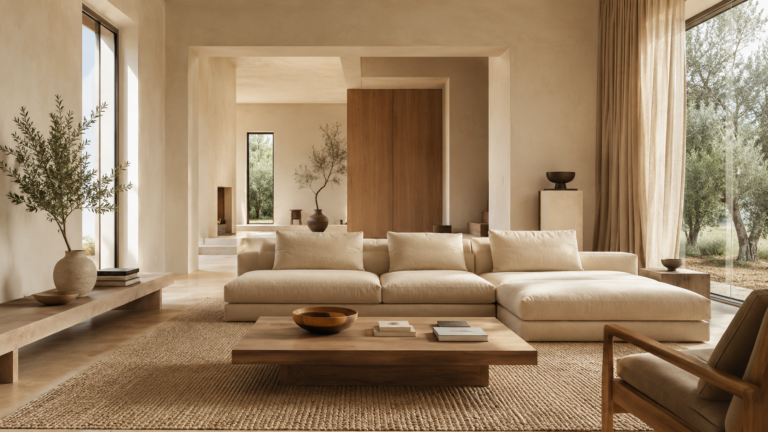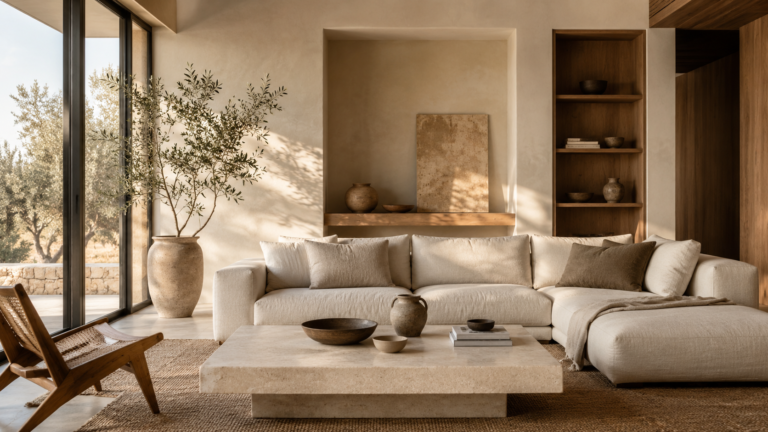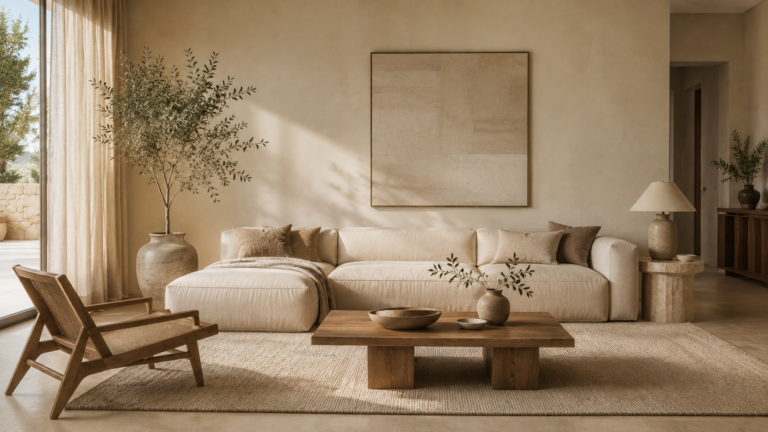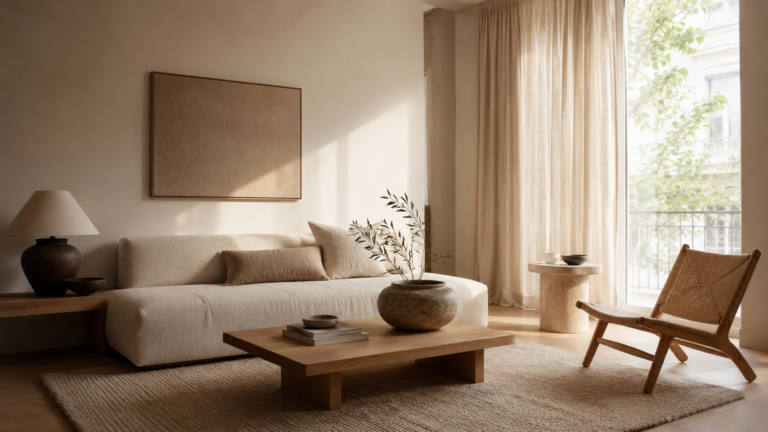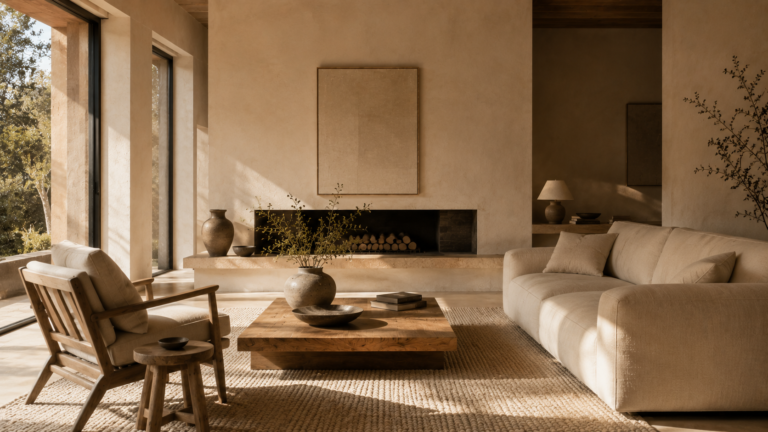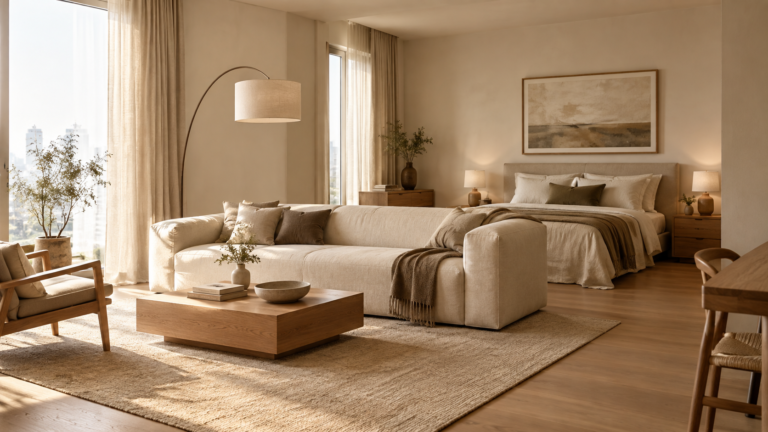
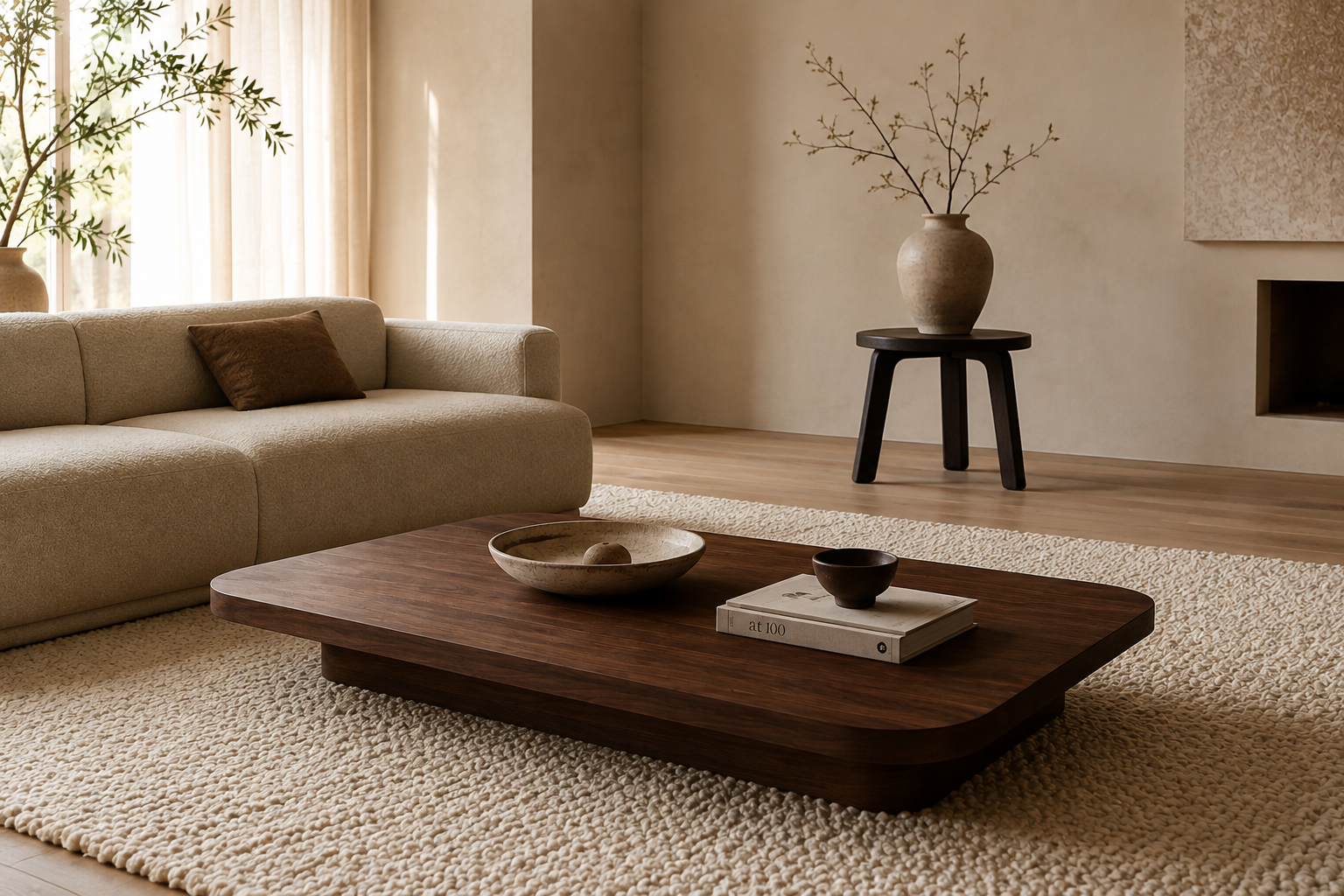
Stop Matching Your Furniture How to Mix Wood Tones in a Warm Minimalist Home
Table of Contents
You are standing in the furniture showroom staring at a beautiful walnut bed frame. The safest most logical next step feels obvious buy the matching walnut nightstands the matching walnut dresser and perhaps the matching walnut bench.
It is the easiest way to design a room and it is also the fastest way to make your home feel like a sterile soulless catalog.
When you buy a matching wood set you strip a room of its history. Warm minimalism thrives on visual friction the subtle intentional tension between different materials that makes a space feel curated over time rather than purchased in a single afternoon. If your walls are white and your textiles are neutral wood is not just a material it is your primary source of color texture and character.
You do not need to replace your floors to buy the dining table you actually want. Here is the exact architectural framework for mixing wood tones cohesively without your space looking like a chaotic afterthought.
WHY MATCHING SETS KILL THE MINIMALIST VIBE
The Sterile Showroom Effect
When every wooden surface in a room shares the exact same species stain and finish the eye glides over them without pausing. There is no depth. In a maximalist home filled with bold wallpapers and vibrant art a matching wood set might fade into the background. But in a quiet pared back aesthetic five pieces of identical dark oak will feel visually heavy and deeply flat.
The Power of Visual Friction
A well designed space requires layers. Just as you must design a warm minimalist room that does not feel empty through varied silhouettes and negative space you must introduce varied wood tones to create warmth. It is the slight contrast between a pale ash chair and a rich teak desk that gives a room its pulse.
“Just as you must design a warm minimalist room that does not feel empty through varied silhouettes and negative space, you must introduce varied wood tones to create architectural warmth.”
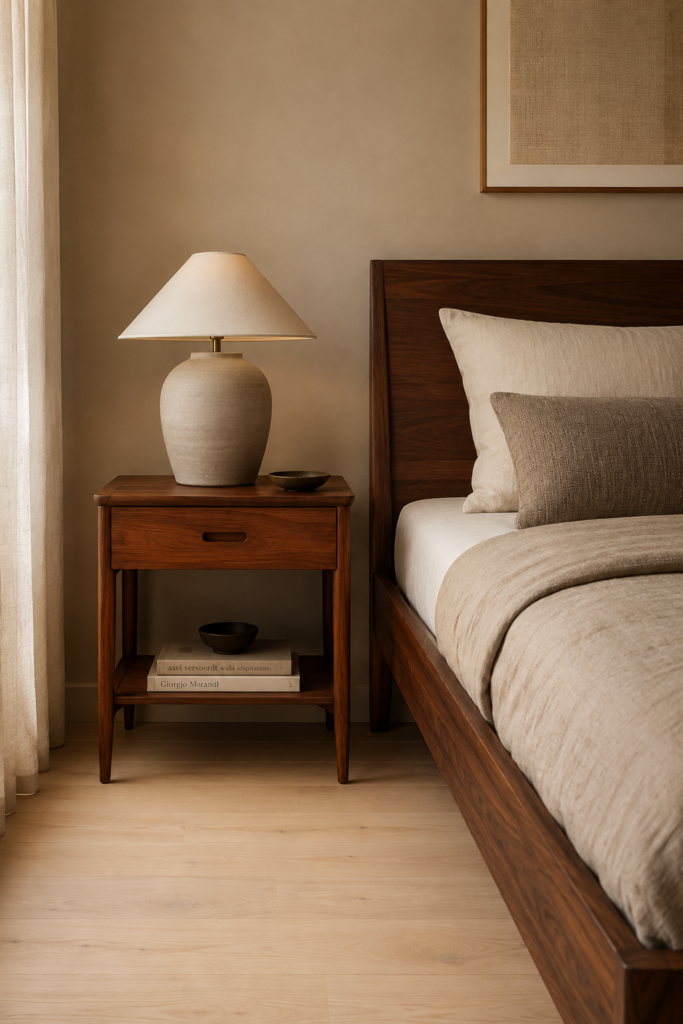
THE 3 TONE RULE FOR MIXING WOODS WITHOUT CHAOS
To achieve the collected organic look without veering into visual clutter strictly adhere to the 3 Tone Rule.
Identify Your Anchor Wood
Your anchor is the wood tone that occupies the most surface area in the room. In most cases this is your hardwood flooring. If you are in a carpeted space your anchor might be exposed ceiling beams built in cabinetry or an oversized dining table. You cannot fight your anchor it dictates the temperature of the entire room.
Choose Your Complementary Wood
This is the secondary wood tone typically used for your large furniture pieces like a credenza or a bed frame. The complementary wood should clearly contrast with the anchor wood so it does not look like a near miss mistake but it must share the same underlying temperature.
Add the Accent
This is where the magic happens. The disruptor is a small intentional dose of a wildcard wood used sparingly. Think of an ebonized black oak stool in a room dominated by pale birch or a vintage heavily grained burl wood bowl on a sleek walnut table. It prevents the room from feeling too calculated.
“Just as you rely on neutral color combinations that ground a minimalist home, you must diagnose the undertone of your wood to keep spaces from feeling chaotic.”
THE SECRET OF UNDERTONES
If your mixed woods look chaotic it is rarely because they are different species. It is because their undertones are fighting.
Warm Cool and Neutral Tones
Just as you rely on undertones to build neutral color combinations that ground a minimalist home you must diagnose the undertone of your wood.
Warm woods have yellow orange or red undertones like cherry mahogany or teak.
Cool woods have gray ashy or green undertones like weathered oak or driftwood.
Neutral woods sit perfectly in the middle with brown undertones like pure walnut.
The Golden Rule of Wood Mixing
Never mix warm and cool undertones in equal measure. If your floors are a cool ashy gray placing a warm red toned cherry wood table on top will create a jarring unpleasant clash.
To mix successfully match the undertones. If you absolutely must bridge a warm and a cool wood you must introduce a true neutral wood like walnut to act as a visual mediator between the two.
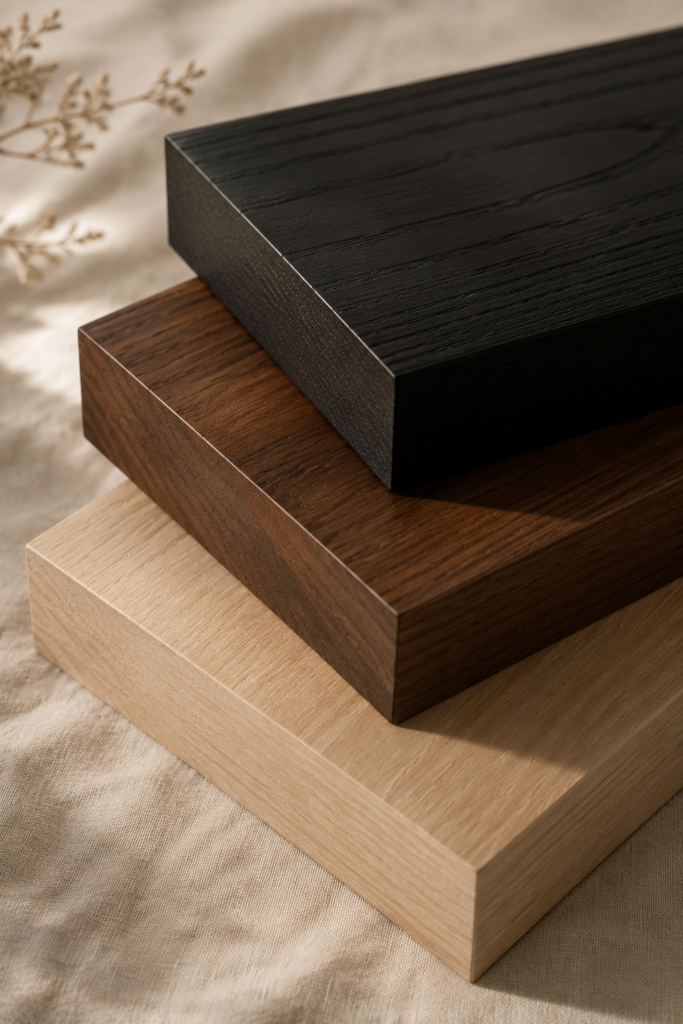
USING GRAIN AND FINISH TO BALANCE THE ROOM
Color is only half the equation. The texture and finish of the wood dictate how light interacts with the furniture.
High Contrast Grains Versus Quiet Woods
Wood grain is a pattern. If you place a highly active rustic oak table with heavy sweeping grain lines next to a heavily grained zebrawood cabinet the patterns will compete for dominance. Pair a loud grain with a quiet tight grained wood like maple or birch to let the statement piece breathe.
“This is especially important when ditching overhead glare for layered ambiance, since matte woods absorb soft lamp light beautifully whereas glossy surfaces bounce harsh reflections.”
Skip the High Gloss
Warm minimalism is rooted in tactile comfort. High gloss polyurethane finishes reflect light harshly and feel distinctly artificial. To maintain an organic grounded aesthetic exclusively source woods with matte satin oiled or raw edge finishes. This is especially important when ditching overhead glare for layered ambiance since matte woods absorb soft lamp light beautifully whereas glossy woods create harsh glares.
“Warm minimalism is rooted in tactile comfort. Before finalizing your wood pieces, remember the principles of bringing organic textures and tactile comfort to ensure the room feels lived-in rather than sterile.”
THE BUFFER TECHNIQUE HOW TO SEPARATE CLASHING WOODS
What if you are a renter stuck with orange toned floors or you inherited a dining table that completely clashes with your architecture. You use a buffer.
Anchoring with Textured Textiles
You should never place a wooden furniture piece directly onto a clashing wooden floor. You must create visual separation. Bringing organic textures and tactile comfort into the room via a thick jute hand knotted wool or plush boucle rug instantly breaks the sightline. The rug acts as a palate cleanser for the eye allowing both woods to coexist in the same room without touching.
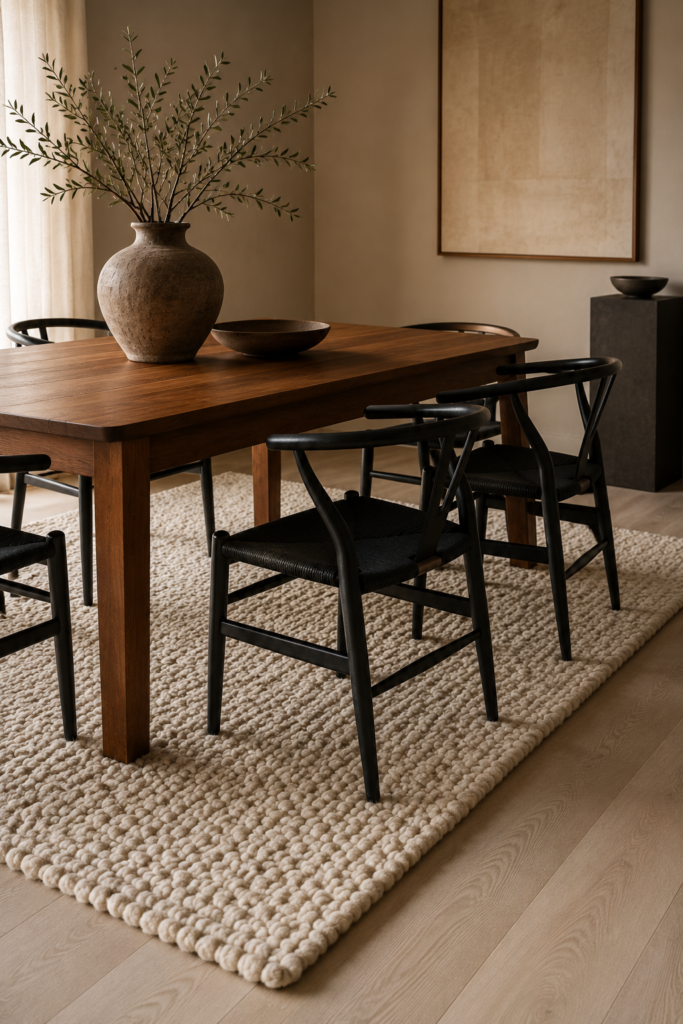
Breaking It Up with Stone and Metal
If a room is starting to feel like a sauna due to an overload of timber break it up with opposing natural materials. Introduce a honed travertine side table a marble plinth or matte black iron hardware. Cold smooth materials provide immediate relief from the heavy warmth of wood.
PERFECT PAIRINGS WOOD COMBINATIONS THAT ALWAYS WORK
If you want a fail proof formula steal one of these architectural pairings.
White Oak Walnut and Ebonized Wood
This is the holy trinity of modern warm minimalism. The pale white oak acts as an airy bright anchor usually on the floors. The walnut brings deep chocolate brown warmth and grounds the space. The ebonized wood provides sharp graphic contrast for small accents.
Ash Teak and Matte Black
For a slightly more mid century leaning aesthetic. Ash provides a quiet pale backdrop while the teak injects a vibrant warm honey tone. The matte black metal or painted wood anchors the mid century warmth and keeps it looking contemporary rather than retro.
FREQUENTLY ASKED QUESTIONS
Does my furniture have to match my wood floors ?
Absolutely not. In fact it should not. Matching your furniture exactly to your flooring creates a camouflaged effect where the furniture gets lost. Your furniture should be at least two shades lighter or two shades darker than your floors to create necessary contrast.
How many wood tones is too many in one room ?
Three is the optimal sweet spot for a curated warm minimalist space. Introducing a fourth tone requires advanced buffering with rugs and stone and anything beyond four will generally make a minimalist room feel chaotic and unstructured.