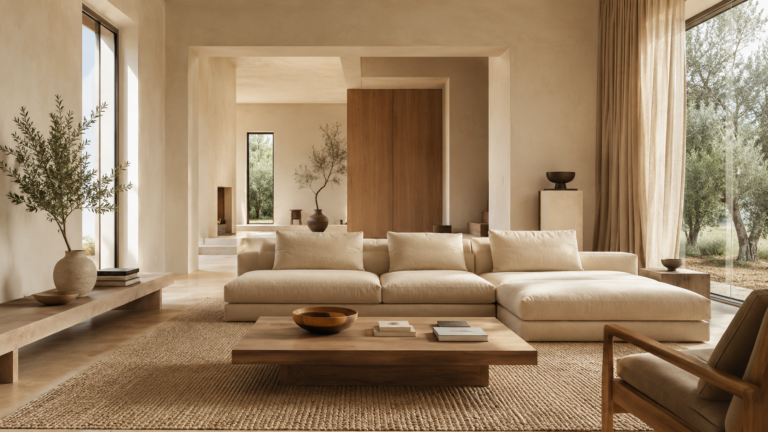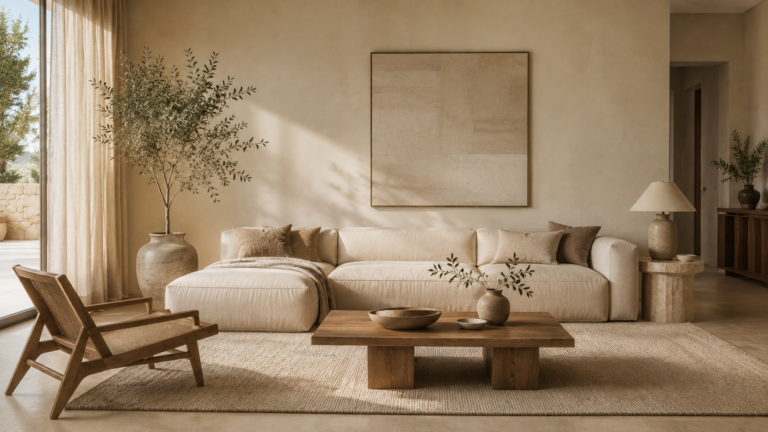
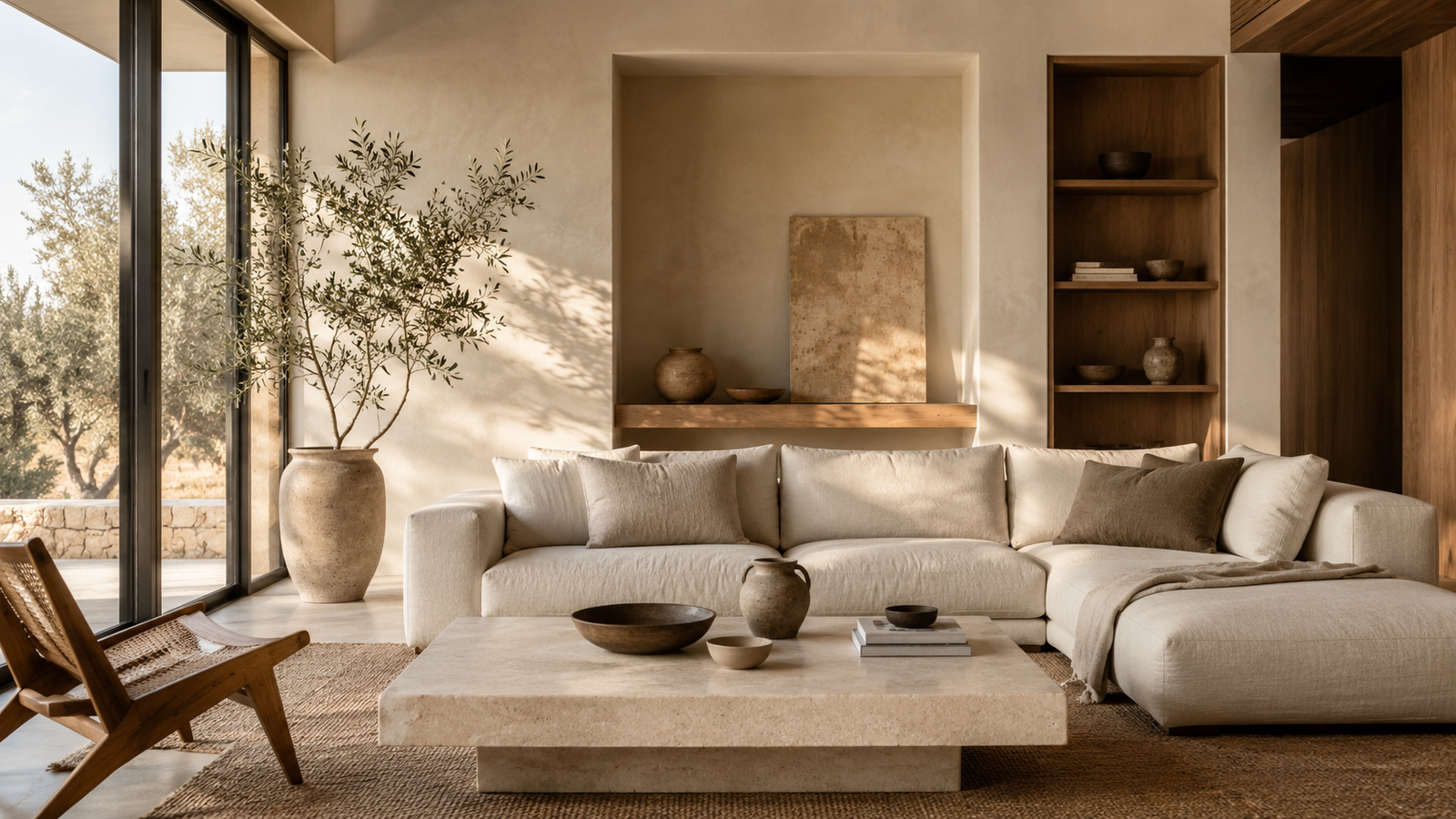
The Anatomy of Quiet Spaces: How to Design a Warm Minimalist Room That Doesn’t Feel Empty
Minimalism was supposed to make a room feel calmer.
So why do some minimalist rooms feel strangely cold?
You know the room: pale walls, almost nothing on the surfaces, a perfectly proportioned sofa, perhaps a single vase placed carefully on a console. Everything is clean. Everything is intentional.
And yet, something is missing.
The room doesn’t feel peaceful. It feels unfinished.
The difference is subtle, but important.
A minimalist room doesn’t need more things to feel complete. It needs more intention.
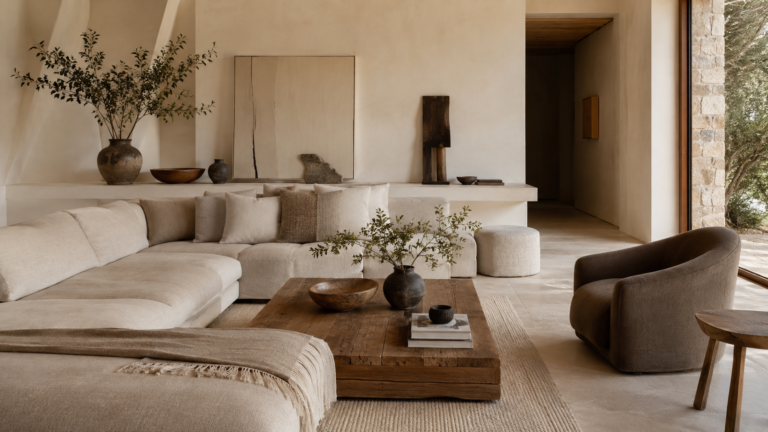
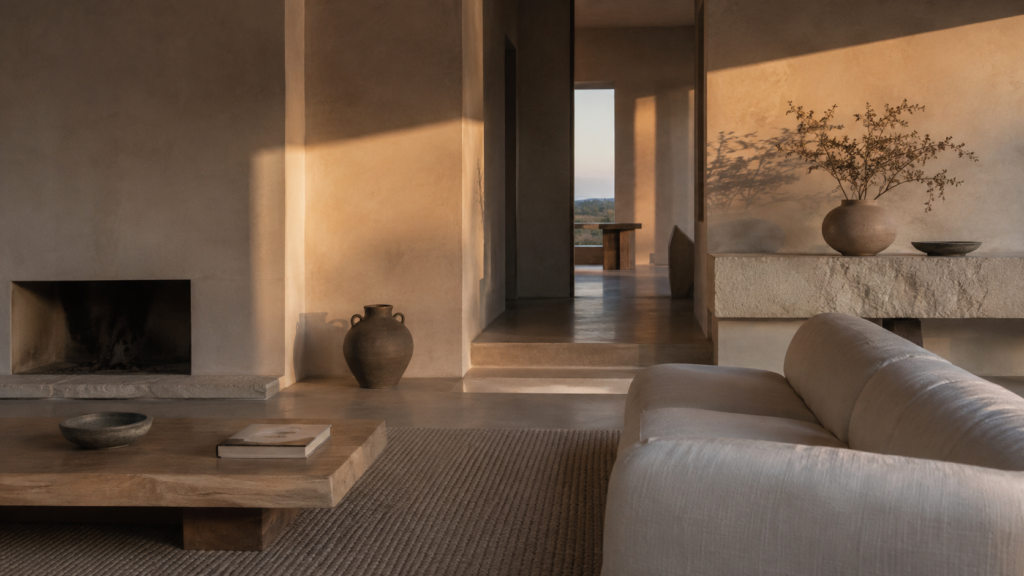
That might come from the grain of natural oak. The softness of linen against a hard architectural line. The natural variation in a limestone surface. The warm pool of light beside a reading chair. A stack of books that quietly suggests someone actually lives there.
This is where warm minimalism begins.
It isn’t about abandoning minimalism. It is about softening it — using natural materials, warm neutral colors, layered textures, thoughtful lighting, and carefully chosen objects to create a home that feels calm without feeling empty.
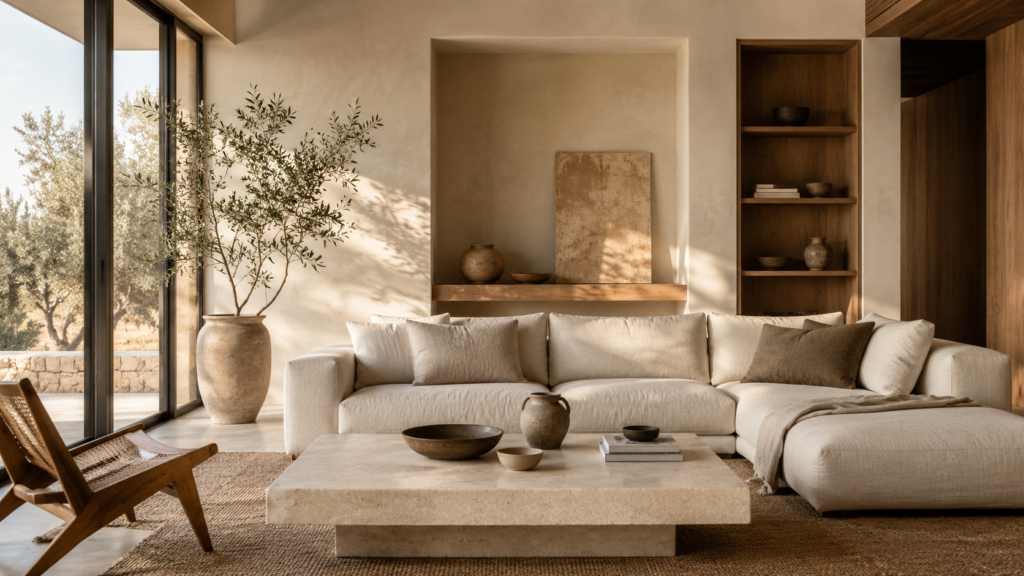
Table of Contents
The Difference Between an Empty Room and an Edited Room
There is a useful distinction between empty and edited.
An empty room has things removed from it.
An edited room has decisions made about what stays.
That distinction changes everything.
A room can contain very little and still feel layered, personal, and complete. It can also contain almost nothing and feel visually flat.
The difference usually comes down to a handful of quiet elements:
Light. Material. Texture. Proportion. Life.
Think of them as the anatomy of a quiet space.
Once you start looking at a room through these five elements, minimalist interior design becomes less about filling empty corners and more about creating a sense of quiet depth.
1. Start With Light, Not Decoration
Before choosing another cushion, vase, or decorative object, look at the light.
Light determines how every other material in a room is experienced.
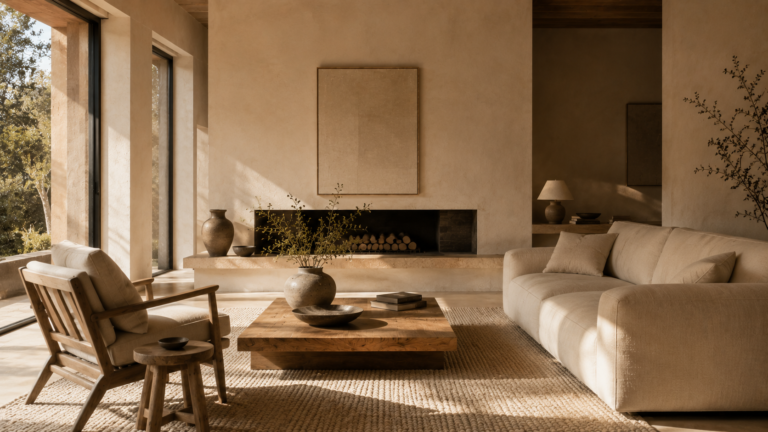
The same warm white wall can feel soft in morning sunlight and clinical beneath a bright, cool ceiling fixture.
This is why some warm minimalist interiors feel warmer without actually containing more objects.
Their light is doing more of the work.
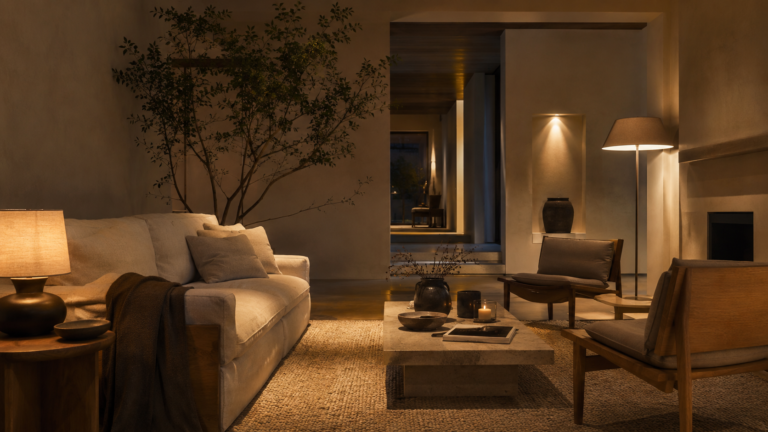
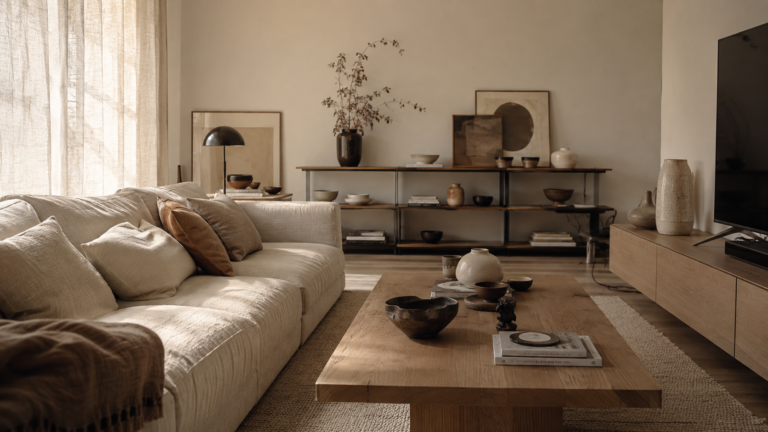
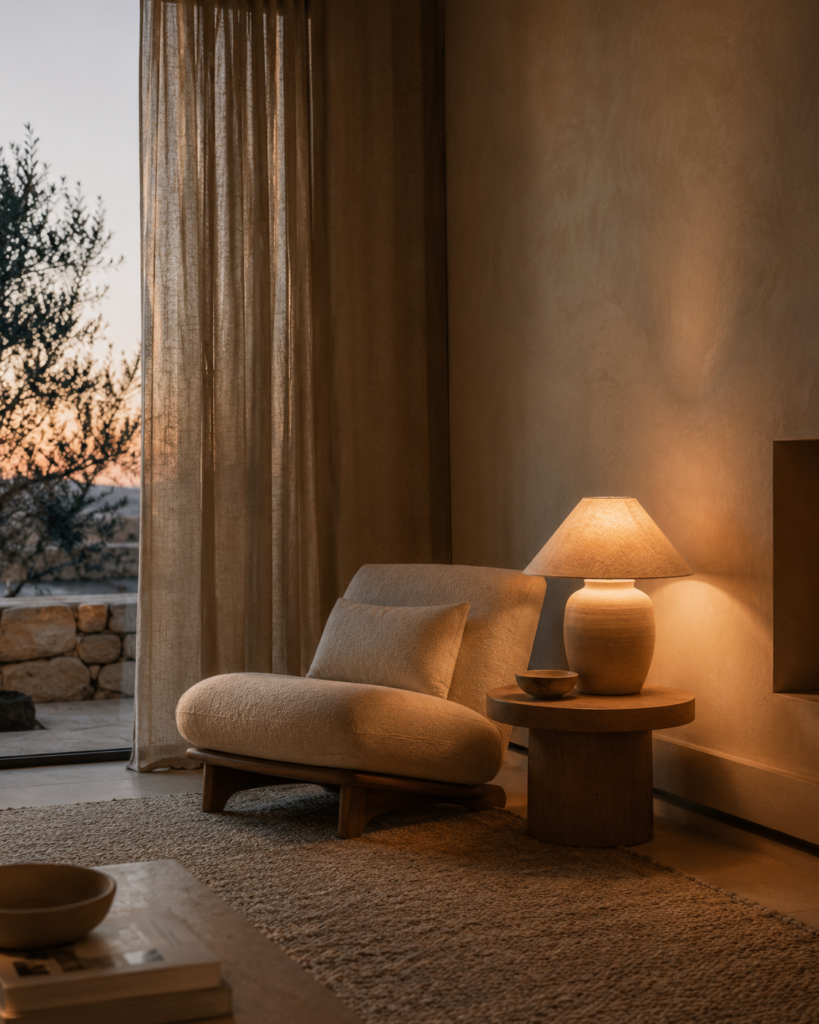
Whenever possible, let natural light move through the room rather than trying to illuminate every surface evenly. Sheer linen curtains can soften daylight without blocking it entirely. Table lamps can create small pools of warmth after sunset. Wall lights can draw attention to architectural details without making the entire room feel exposed.
A quiet room doesn’t necessarily need to be bright.
It needs layers of light.
A simple lighting formula:
Natural light + ambient light + task light = depth
Natural light gives the room atmosphere.
Ambient light creates warmth.
Task lighting gives certain areas a purpose.
Together, they prevent a minimalist space from becoming visually flat.
THE HAVELUME PRINCIPLE
Don’t ask, “Is this room bright enough?”
Ask, “Where should the eye feel drawn after sunset?”
2. Let Natural Materials Replace Decoration
This may be the most important principle in a quiet minimalist interior.
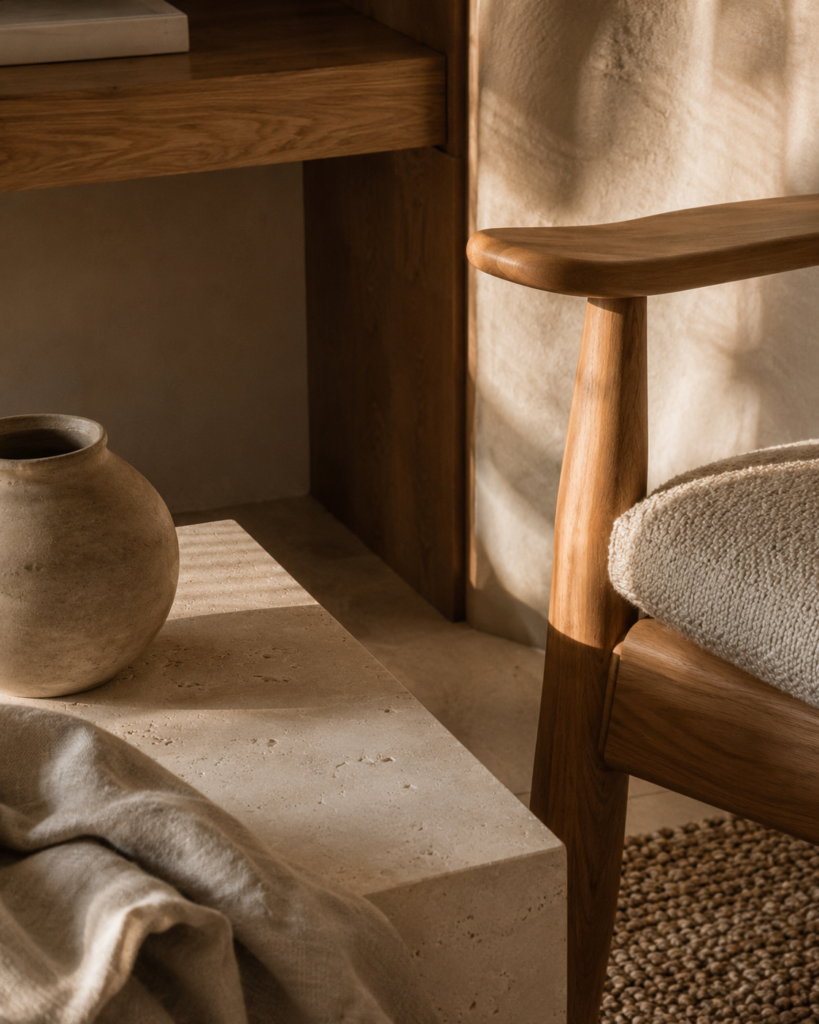
When a room has very little decoration, materials become the decoration.
Natural wood introduces grain.
Stone introduces variation and weight.
Linen introduces softness.
Wool introduces tactile depth.
Handmade ceramics introduce subtle imperfection.
None of these materials need to demand attention.
They simply give the eye something to discover.
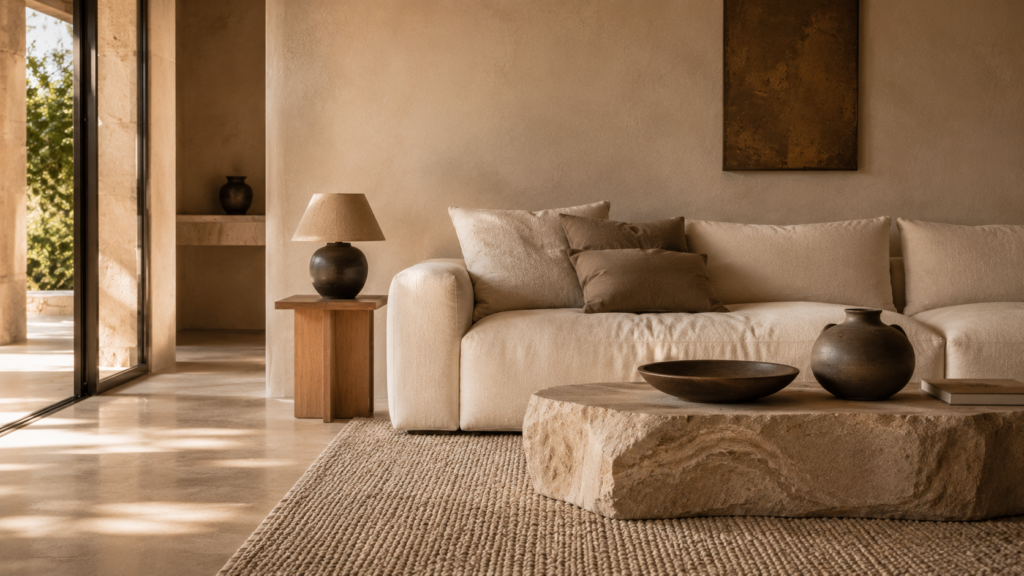
Imagine an otherwise restrained living room with an ivory linen sofa, pale oak furniture, and a honed limestone coffee table.
There may be only three major materials in the room.
But look closer.
The oak has visible grain.
The limestone isn’t perfectly uniform.
The linen catches the light differently across its surface.
Suddenly, the room has visual interest without visual clutter.
That is the difference between decoration and material character.
The quiet material palette:
Wood — warmth and natural movement
Stone — weight and permanence
Linen — softness
Wool — tactile depth
Ceramic — human imperfection
You don’t need all five.
Two or three, thoughtfully repeated throughout a room, can be enough to create a warm minimalist interior.
3. Create Contrast Without Creating Noise
Minimalist interiors rely on restraint.
But restraint doesn’t mean everything should match.
In fact, a room becomes more interesting when opposing qualities sit quietly beside one another.
Smooth stone against rough linen.
Hard architecture against soft upholstery.
Dark wood against warm ivory.
A curved chair against a linear wall.
A handmade ceramic beside a refined glass surface.
These contrasts create tension.
And tension gives the eye somewhere to move.
The trick is to keep the color palette restrained while allowing textures and forms to vary.
You don’t necessarily need more colors.
You need more material conversation.
WHEN A ROOM FEELS FLAT
Don’t automatically add another object.
First ask whether two existing materials need more contrast.
This is one of the simplest ways to make a minimalist room feel warmer without making it feel cluttered.
4. Choose a Warm Neutral Color Palette
There is a misconception that warm minimalism means painting everything beige.
It doesn’t.
A sophisticated warm neutral interior has variation.
Think:
Chalk → Ivory → Oat → Sand → Taupe → Clay → Walnut
These shades can live together because they share a similar visual temperature.
The goal isn’t to make every surface the same color.
It’s to prevent the colors from competing.
A useful approach is to establish one dominant neutral, introduce a warmer secondary tone, and then allow natural materials to provide darker notes.
For example:
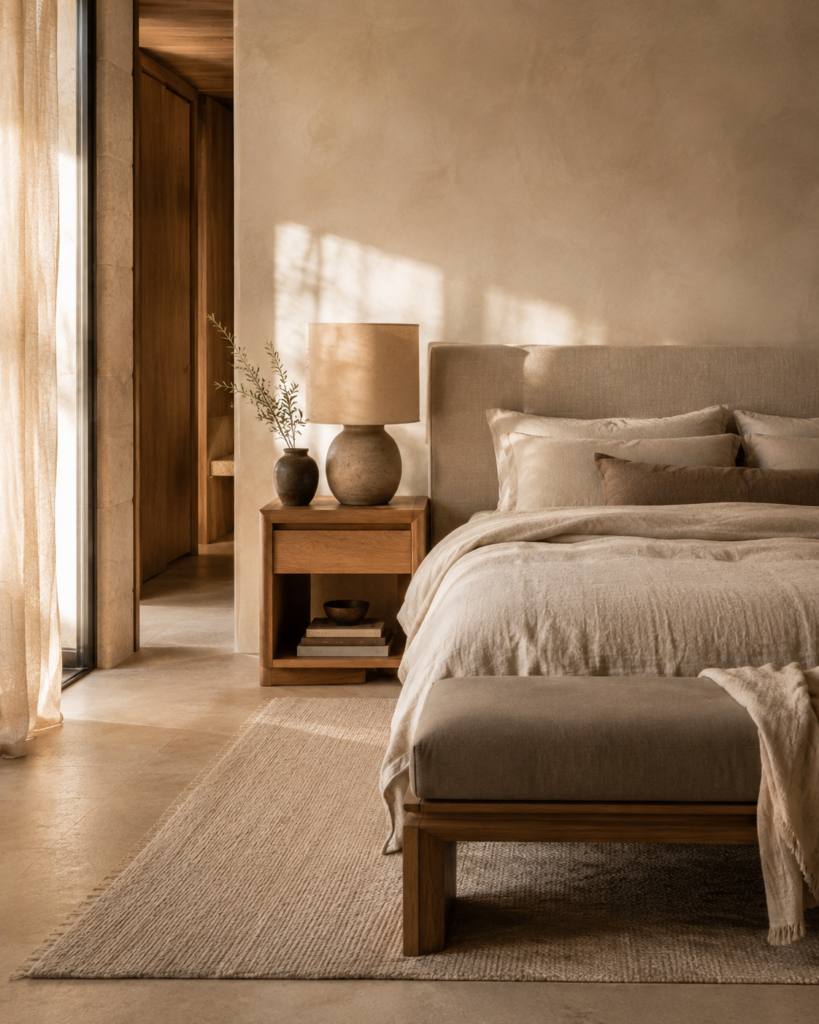
Warm ivory walls
Natural oak furniture
Soft taupe upholstery
Aged brown leather
Muted clay ceramics
The result feels calm because nothing is demanding attention.
But it doesn’t feel empty because the materials create variation.
And warm minimalism doesn’t require you to avoid darker colors altogether. Muted olive, deep brown, charcoal, terracotta, and walnut can all work beautifully when balanced against lighter neutrals.
The question isn’t simply whether a color is light or dark.
It’s whether the color helps the room feel grounded and cohesive.
5. Give Negative Space a Purpose
Negative space is one of minimalism’s greatest strengths.
But negative space becomes uncomfortable when it feels accidental.
A large empty wall can feel intentional when the furniture around it has enough visual weight.
An empty corner can feel peaceful when it creates a clear transition between two areas.
A bare surface can feel elegant when one carefully chosen object gives it a focal point.
The question isn’t:
“What should I put here?”
Instead, ask:
“Does this space need anything at all?”
Sometimes the answer is no.
And that is precisely the point.
EMPTY SPACE IS NOT A PROBLEM TO SOLVE.
A quiet room needs somewhere for the eye to rest.
This is one of the fundamental ideas behind minimalist interior design: restraint creates visual breathing room.
The goal isn’t to make every surface useful.
Sometimes the most useful thing an empty surface provides is calm.
6. Use Scale to Make Minimalism Feel Intentional
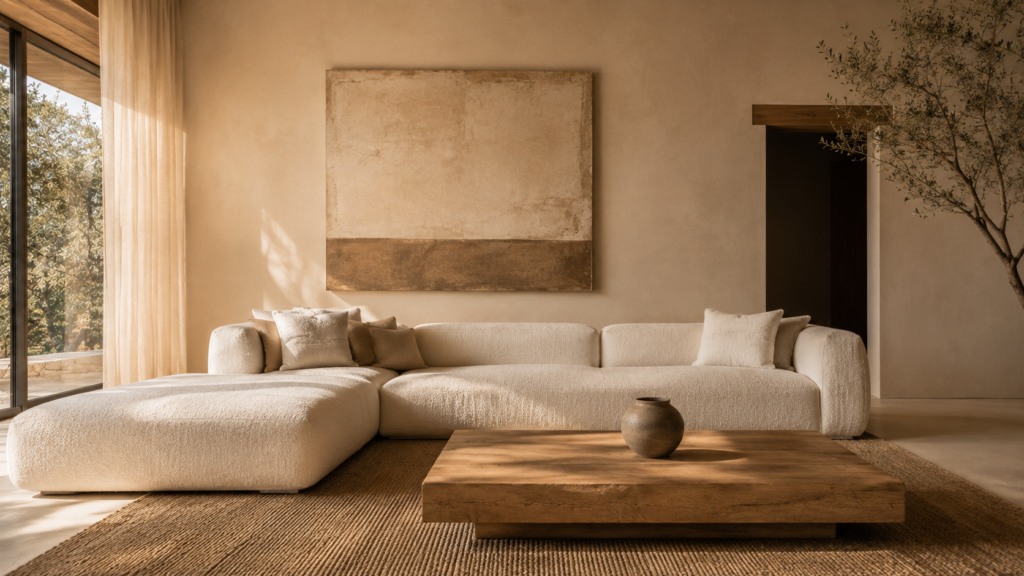
One large, beautifully proportioned object can often do more than five small decorative pieces.
A generous linen sofa.
A substantial wooden dining table.
An oversized pendant.
A large framed artwork.
A sculptural chair.
Scale gives a room confidence.
Too many small objects create visual fragmentation. The eye keeps jumping from one thing to another.
Larger forms create visual calm.
This doesn’t mean everything needs to be oversized.
It means the room should contain a few elements with enough presence to anchor the space.
Try this:
Instead of styling a console with seven small objects, experiment with:
One large artwork + one sculptural object + empty space
The room may instantly feel more deliberate.
This is especially useful when designing a small minimalist room. Rather than filling a limited space with multiple small pieces, choose fewer elements with better proportion.
7. Introduce Something Imperfect
Perfectly matched interiors can become strangely lifeless.
Natural materials solve part of this problem because they are rarely identical.
Wood has knots.
Stone has veins.
Linen wrinkles.
Clay varies from piece to piece.
Handmade objects carry evidence of the person who made them.
These irregularities aren’t flaws.
They’re what prevent a restrained interior from feeling manufactured.
This is particularly important when the rest of the room is highly controlled.
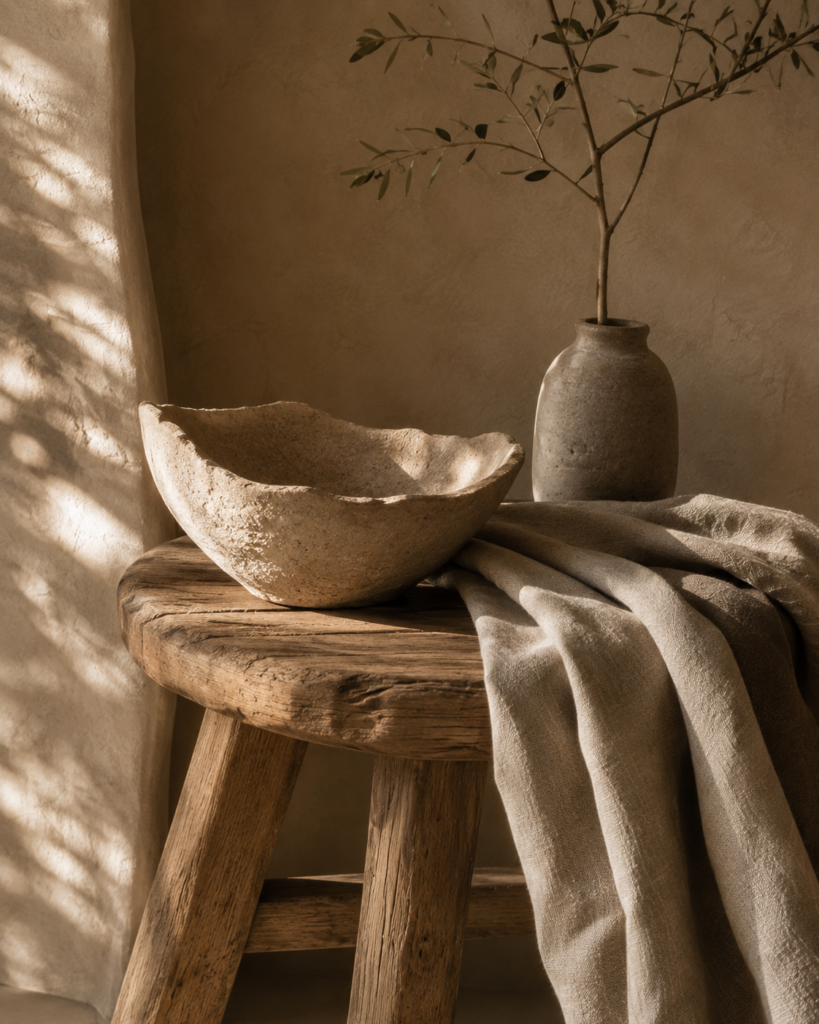
One slightly irregular ceramic bowl can soften an otherwise precise composition.
A vintage wooden stool can introduce history.
A woven basket can add a small amount of organic disorder.
The room doesn’t become messy.
It becomes human.
And that small sense of imperfection is one reason natural materials work so well in warm minimalist home design.
“By balancing your open layout correctly, you can finally fix why your minimalist living room still feels messy instead of serene.”
8. Let the Room Show Signs of Living
This is where many minimalist interiors go wrong.
They remove so much evidence of life that the room begins to resemble a showroom.
A quiet home can still contain books.
It can contain photographs.
A favorite chair.
A bowl of fruit.
A record player.
A collection of ceramics.
A blanket casually folded over the arm of a sofa.
These aren’t failures of minimalism.
They’re evidence that the space belongs to someone.
The goal isn’t to eliminate personality.
It is to edit personality.
Keep the things that mean something.
Remove the things that are there simply because there is an empty surface.
That distinction is subtle, but it can completely change how a room feels.
A cozy minimalist home doesn’t need dozens of accessories. It needs a few things that make the space feel inhabited.
9. Build a Rhythm of Soft and Hard
One of the easiest ways to make a minimalist room feel warmer is to alternate tactile qualities.
If a room contains:
Hard floor + hard table + hard wall + hard lighting
it will naturally feel severe.
Introduce:
Wool + linen + timber + soft upholstery
and the same architecture can feel completely different.
Think of the room as a conversation between opposites.
Stone / Linen
Wood / Glass
Plaster / Wool
Metal / Ceramic
Hard / Soft
The objective isn’t to make everything soft.
It’s to create balance.
Texture is particularly powerful because it adds visual richness without necessarily adding more color or objects.
That is why a textured rug, linen curtain, or natural wood surface can transform a room while preserving its minimalist character.
“To truly cure that empty feeling, you need to rely on tactile warmth; read our guide on bringing organic textures and tactile comfort into minimalist rooms to ground your space.”
10. Edit Before You Add
When a minimalist room feels empty, the instinct is usually to buy something.
Resist it.
Before adding another object, remove three.
Look at the room again.
Then ask:
What feels essential?
What feels meaningful?
What creates balance?
What is simply occupying space?
This is where minimalism becomes less about aesthetics and more about intention.
A room doesn’t become sophisticated because it contains expensive objects.
It becomes sophisticated when every visible element feels like it has a reason to be there.
The three-question edit:
Does it serve a purpose?
Does it hold meaning?
Does it contribute visually?
If the answer is no to all three, perhaps it doesn’t need to stay.
This simple exercise can be more effective than buying another piece of minimalist home decor.
A Quiet Room Doesn’t Need to Be Beige
There is a misconception that warm minimalism requires a sea of beige.
It doesn’t.
Warmth can come from temperature, not simply color.
A deep olive green can feel warm.
A muted terracotta can feel warm.
Smoked walnut can feel warm.
A soft charcoal can feel warm when paired with natural materials and gentle lighting.
The better question is:
“Does this color make the materials around it feel more grounded?”
A restrained palette can contain darker shades.
What matters is the relationship between them.
The 5-Layer Anatomy of a Quiet Space
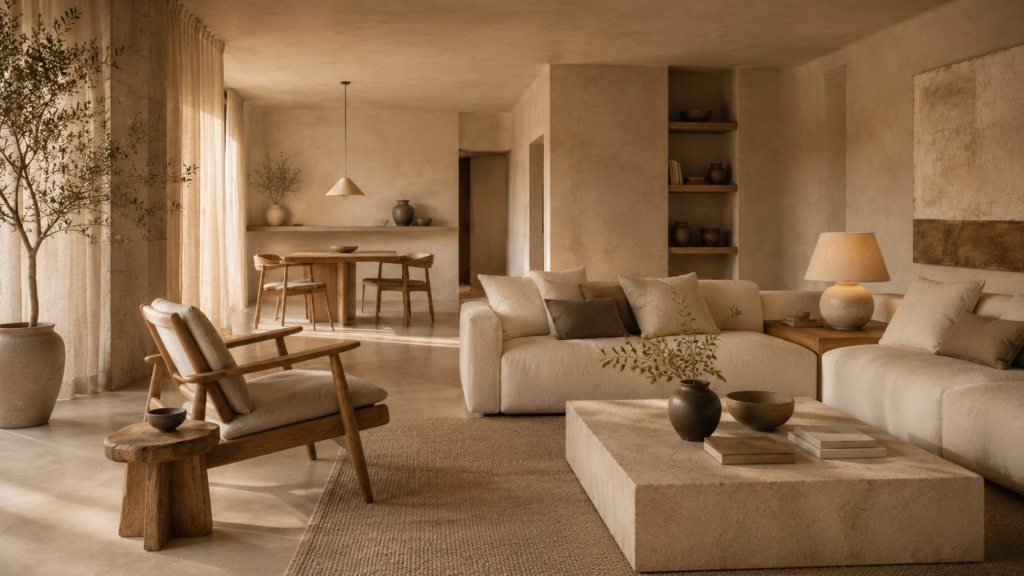
If you’re starting from scratch, think about the room in five layers.
01 — LIGHT
How does daylight enter?
Where does artificial light fall at night?
02 — COLOR
What is the dominant visual temperature?
03 — MATERIAL
Which natural materials give the room character?
04 — TEXTURE
Where do soft and hard surfaces meet?
05 — LIFE
Which objects make it unmistakably yours?
You don’t need to maximize every layer.
You simply need to make sure none of them has been forgotten.
A Simple 10-Minute Quiet Space Edit
You don’t need a renovation to change the feeling of a room.
Try this instead.
Stand in the doorway.
Don’t move anything yet.
Look.
Notice the first three things your eye lands on.
Then ask yourself:
Is there too much visual competition?
Remove one unnecessary object.
Next, touch the materials around you.
Are most surfaces hard and smooth?
If so, introduce one tactile element: linen, wool, wood, or handmade ceramic.
Now look at the lighting.
Could one harsh light be replaced by a smaller, warmer source?
Finally, leave one area completely untouched.
Let it breathe.
Then step back.
Sometimes the biggest improvement is not what you add.
It’s what you allow to remain quiet.
What Warm Minimalism Is Not
Warm minimalism isn’t a room where everything is beige.
It isn’t a collection of expensive designer furniture.
It isn’t removing every personal possession.
It isn’t covering every surface with boucle, wood, and dried branches.
And it certainly isn’t creating another version of the showroom aesthetic that minimalism originally tried to escape.
Warm minimalism is restraint with humanity.
It is a room where materials have character.
Where light is considered.
Where negative space has purpose.
Where objects are chosen rather than accumulated.
And where the person living there is allowed to leave a trace.
The Quietest Rooms Are Often the Most Considered
A quiet room doesn’t announce itself.
It doesn’t need a dramatic color palette or a collection of statement pieces.
Its character reveals itself slowly.
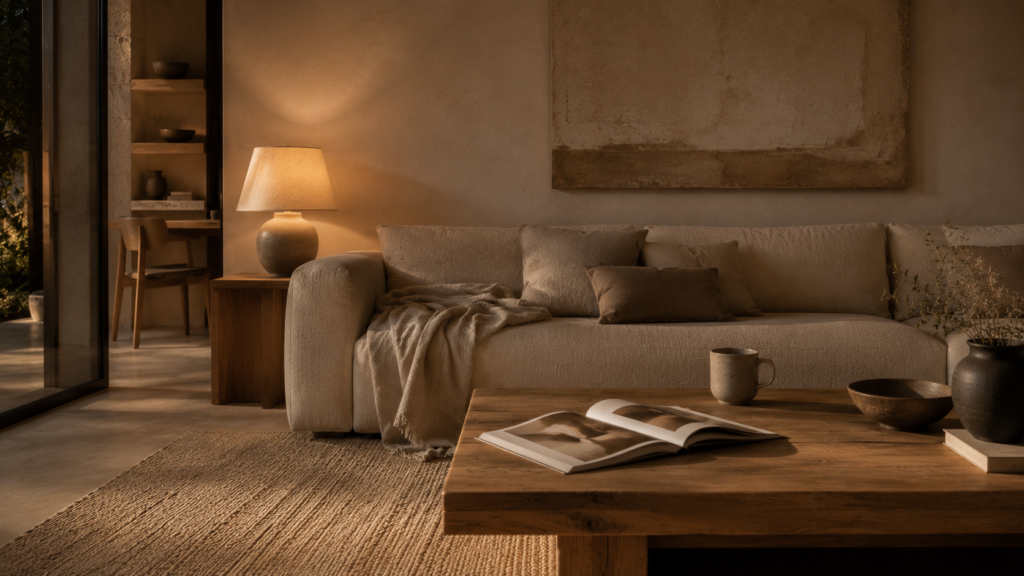
First you notice the light.
Then the grain of the wood.
Then the texture of the linen.
Then the irregular edge of a ceramic vessel.
Then the book left on the table.
And eventually, you notice something more difficult to define.
The room feels like someone thought carefully about how they wanted to live.
That is the real anatomy of a quiet space.
Not emptiness.
Not perfection.
Intention.
Because perhaps the next evolution of minimalism isn’t about removing more.
Perhaps it’s about choosing better.
Fewer things, but things with character.
Less decoration, but more texture.
Less visual noise, but more material depth.
A room doesn’t have to contain everything.
It simply needs to contain enough of what matters.
That is where minimalism becomes quiet. And where a house begins to feel like home.
The Havelume Takeaway
The most successful minimalist home interiors aren’t necessarily the ones with the fewest objects.
They’re the ones where every visible element has a reason to exist.
Light creates atmosphere.
Natural materials create character.
Texture creates depth.
Negative space creates calm.
And personal objects create belonging.
Together, these elements create something more meaningful than an empty room.
They create a quiet space — a home that feels edited, grounded, and unmistakably lived in.
Minimalism doesn’t have to feel empty.
It simply has to leave room for what matters.